Showing posts with label featured. Show all posts

Wednesday, 9 January 2019

17 Good Reasons to Drink Nikken Water

Nicki Edgell
It is now well known and accepted that the amount of water you consume everyday plays an important role in maintaining a healthy body - experts recommend drinking 8 to 10 glasses (about 2 litres) of water each day to maintain good health.

This has to be pure water. Teas, coffees, carbonated water, fizzy drinks and fruit juices do not count - the body sees any such beverages as food and treats them completely differently to water. Furthermore many are high in caffeine and sugar, are acidic, and are actually dehydrating thus achieving the exact opposite of what you are aiming to do with water.

But not all water is equal so what water should we drink? Is tap water too full of contaminants? Is bottled or mineral water a better alternative? Or should I invest in a home water filtration system, and if so, which type?

Japanese wellness company Nikken's water filter system take its inspiration from the fresh streams of Japan, where the benefits of mineral rich, alkaline spring water have been known for centuries. This is the idea behind the Nikken Pimag® Waterfall which seeks to recreate pure natural spring water in your home at an economical cost. Read on to discover 17 good reasons why we think Nikken water should be your drinking water of choice:

"The healthiest water on the planet." 


  1. Nikken Pimag® water is particularly efficient at hydrating you - humans should generally be made up of around 70% water (and more in the brain) but 75% of us are typically dehydrated. Many symptoms of unwellness are the same as the symptoms of dehydration and rather than being fundamentally unwell a person may just be dehydrated.

  2. The Nikken water is energised, structured and conditioned by a unique filtering and magnetic system which crucially aids its absorption by the body's cells. This is demonstrated by you not feeling the water sitting heavy in your stomach like you generally do if you drink a glass of regular tap water. This improved absorption also means you will not wee it straight out like you do with normal water.

  3. The Nikken water activates your thirst mechanism which is normally suppressed or misinterpreted (often as hunger). The more Nikken water you drink the more you want! This further helps to rehydrate you quickly. Try it!

  4. This encouragement to drink more and more water will not only rehydrate you, it will fill you up and satisfy your "hunger" thus being very useful as part of a weight management diet.

  5. The water is alkaline with a ph of approx. 8-9 (most bottled, and Britta, water is acidic - less than ph7, and most tap water is ph neutral, around ph7) - acidic diets can contribute towards many health problems such as osteoporosis and diabetes. Alkaline water can help contribute towards better body balance by counteracting the increased acidity of our modern diet. 

  6. Acid to Alkaline - the pH (l to r) respectively of Flavoured Water, Sparkling Water,  Bottled Water, and Nikken Pimag

  7. The all-in-one multi-stage filter removes contaminates typically present in tap water - these include heavy metals, pesticides, and chlorine. Two thirds of fluoride is also removed.

  8. Most alternative filtration systems take out the good minerals as well as the bad leaving pure, clean, but "dead" water. The Nikken system adds back essential minerals including magnesium, potassium, calcium, manganese and sodium.

    A carrot after 5 weeks sitting in respectively Tap, Bottled, and Nikken Pimag, water

  9. Many filtration systems waste a lot of water - very bad for the environment and your water bills! The Nikken Pimag Filter uses 100% of your tap water.

  10. The Nikken filter is a countertop model - no plumbing is required and the system is quick and easy to use straight out of the box, with a small work surface footprint. It is therefore also relatively portable and can be moved around the kitchen or house or office, or even taken on holiday.

    The Pimag Waterfall - in the box

  11. The Nikken Waterfall is a gravity fed system with good flow rates - much quicker than many alternative brands. The system's 5 litre tank will refill in a matter of minutes.

  12. The system has very good filter replacement rates - the filter will last for 900 litres (for a family of 4 using the system for all their drinking and cooking needs this will usually translate to about 3 months).

  13. Nikken water is oxygenated and naturally ionised (without artificial electrolysis). The water has antioxidant properties as demonstrated by an improved Oxidation Reduction Potential reading - the ORP - over tap water and bottled water.

  14. The Nikken water systems use BPA-free non leaching bio-degradable plastics.

  15. At £265 ($327) for the unit and £36 ($39) for replacement filters the Nikken system is one of the cheapest home water filtration solutions on the market. The replacement filters work out at approximately 4p/litre on average, considerably cheaper than buying in bottled water.


  16. Nikken water can also be obtained from any tap when you are out and about via the Nikken Pimag Bottle - excellent for travel including airports.

  17. The system has been tested and verified by the Water Quality Association of America earning a "Gold Seal Approval".

  18. And last and by all means not least the light velvety water tastes great! You will not enjoy tap water after tasting Nikken water. Come to a Nikken demo near you and try some!


  19. The Nikken Bottle, and Waterfall


    If you would like to learn more please leave comments or questions below, or visit our site at http://piwaterfilters.com Alternatively you are most welcome to ring me Nicki Edgell on (0044) 7786 405366.

    To order Nikken water products direct online please visit https://tiny.cc/piwater for UK and European customers. We can also ship to North and South America.

    Nikken water - the easiest way to immediately improve the health of you and your family.

    Before you go...


    What Newsletter subscribers may expect: 
    Subscribers receive an exclusive seasonal newsletter (sent approximately each quarter) including tips and advice on nutrition and wellness, recipes, and special reader offers. Check out an example here and if you like what you see sign up to receive similar future publications direct to your inbox.


    Business Opportunity:
    Nikken are looking for new collaborative entrepreneurs! Do you enjoy networking and meeting people interested in self development and health? Do you think you could sell Nikken water filters? If you would like to talk about joining my team please give me a call or visit http://nikkenergy.com for more information.


Wednesday, 20 June 2018

No News is Good News, So Just Avoid It

Nicki Edgell


Mark Twain wrote: “If you don't read the newspaper, you're uninformed. If you read the newspaper, you're mis-informed.”

I'm not sure you are necessarily uninformed if you avoid newspapers any more. It's so much easier to hear about what's going on through numerous sources (even if you don't want to) - TV, radio, friends, parents, internet, social media, and we are now more interactively "in control" of our sources.
I have no idea why there has been such an outcry recently over so called "false" news. There has been plenty of false news for years.
Generally the news is rubbish at best and depressing at worse. It serves little point. It is nearly always bad. Or it's just comment or opinion or gossip. It's a waste of time. It's filtered. It is biased. It has an agenda. It's obsessed with wars and terrorism out of all proportion to the reality of 99.9% of the population. It peddles false flags, fear, negativity, and hate, with dubious motives. It's delivered by the sanctimonious BBC dressed up as impartial public information, or the trash gutter press obsessed with soaps, football, immigration, boobs, bombs and booze.
Frankly the sort of "news" delivered by the gutter press is blatant hate speak and I have no idea why it isn't illegal.
News is everywhere - streamed constantly in train stations, banks, waiting rooms. It's always live! and breaking! and 24/7, but completely disposable, repetitive and boring. Read a newspaper a week, a month, or a year later, and the news won't have changed. Read the same "redtop" each day and the headlines will blatantly be the same day after day imbuing a constant subconcious indoctrination of the readership. I know it is awful what is going on in some places in the world, but there are no refugee camps of terrorist jihadists in my back garden as the Daily Mail would lead me to believe.

There is always a crisis

News keeps us in a state of fear. I don't know why, or even if this is intentional for reasons of elite power and control of the masses, as conspiracy theorists would maintain, or is it just the human condition that we like to be frightened and shocked, like we would be at a horror movie, so we actually like to read about bad stuff happening, to other people... and only by the grace of god not to us, yet?

But here's a thing. News is actually rare - by definition. If these awful things were happening all the time to everybody, everywhere, it wouldn't be news any more, like heart attacks and car crashes (except big ones at weekends when there isn't anything else to report). Despite the apparent proliferation of shocking news, especially it seems in the last couple of years, statistically we still live in the safest time there has ever been in human history.

I used to read a newspaper - many years ago. It was supposed to be good for you. It meant you were knowledgeable about current affairs. I was even asked current affairs questions in interviews.

Not any more. I gave up the news. I realised it was just depressing and irrelevant. If you want to be optimistic and positive surround yourself with optimism and positivity. Ignore the news. Spend the time doing something rewarding.

Please have a watch of this excellent TED talk by Brighton resident Dr. Bramwell.


Like this post? Sign up to receive new posts direct to your email inbox.


Friday, 4 August 2017

The Nikken Business Opportunity in Perspective - Real Earnings Figures Revealed!

Nicki Edgell
Nikken enjoys a reputation as a product driven company. Its successful 40 - year track record and international expansion has helped make it one of the fastest growing and most successful network marketing companies in the world. This dynamic growth comes for a number of reasons, not the least of which is the terrific income opportunity that Nikken provides.

However earnings figures in Network Marketing can sometimes feel rather nebulous and theoretical. Presentations often show the leveraging effects of building a team of 3 x 9 x 27 x 81 etc - fine in theory but rarely how it happens in the real world. So what are the real figures?


What Can I Earn In Nikken?

When someone is either considering a Nikken home based business or is a new Consultant, the questions invariably arise:

  • How much does the average Nikken Consultant make in terms of monthly income — or annual income? 
  • Does pursuing a Nikken home based business benefit me financially? 
  • What are the best steps to take along the way? 
  • How long does it take?
  • What kind of return can I expect in relation to the effort I am putting in?
  • Are the returns sustainable?
The chart below averages both general income and specific levels of achievement from the Senior Consultant rank up to Royal Diamond. Nikken Consultants of every level have shared the Nikken home based business opportunity with others and have used it as a pillar to build a solid, secure financial future. The chart gives average figures for all active Consultants and for all individuals at certain levels in Nikken in the US.

The stats show a wide range. As long as 240 months after signing up (20 years), some Nikken Consultants are still at Direct or Senior Consultant level, while others have climbed to the rank of Diamond or Royal Diamond. Many of course advance much quicker.

A Direct consultant earned on average $116 in the year, with the top earner at $1,109 (ie. about $100 a month). The top Silver consultant earned $17,354  with the average being $552 — Silver is the first "serious" rank where you will have a team and can begin to earn leadership bonuses. It is also very achievable and accounts for about a third of all Nikken consultants.

At the next levels of Gold and Platinum earnings roughly double respectively — the average levels begin to provide a significant bonus but not yet a living wage alone, although the top earners are achieving this with over $40,000 a year.

The real difference is seen at the Diamond ranks where six figure earnings are achievable. One person achieved the top rank of Royal Diamond within 10 months! Average earnings at this rank are over $100,000 pa with the top earner achieving a fraction under $750k.

Overall the figures tend to comply with industry findings that on average around 5% are "successful" in network marketing - of course this depends on your own goals and definitions of success. For a start financial wellbeing is only one measure of the success of a venture. Nikken prides itself on striving for balance in 5 areas of life - mind, body, society, family, and finances, and many consultants gain hugely from personal development.

The higher levels of income and achievement rely heavily on personal effort and individual application. The majority of superior performances rely upon the individual’s skill, training, effective business-building techniques and good old-fashioned hard work.
Many network marketers feel they spend a period not earning what they deserve, followed by a period earning more than they feel they deserve. This is a result of moving from time restricted earnings to the exponential mathematics of leveraging a team. 
And there is no question attitude plays a major role. Some people are passionate about their Nikken business and approach it with a sense of urgency. Others, though they may be committed, are not in such a hurry. That's fine. Stickability is also a huge asset. Many people start such a venture and then give up after a couple of months.

One of the joys of a home based business is you can fit it around your needs. At the recent "Team Kaizen" meeting in Mexico one of my big "takeaways" was not only the numerous different methods people used to be successful in Nikken, but also the various different types of people on the team.
There are many different ways to do Nikken.
It is also significant, however, to note that tens of thousands of households in North America use Nikken products as end users with no thought of building a Nikken business. This is not surprising. Nikken products have been sold by the millions worldwide, and the company remains a world leader in broad spectrum wellness technology.


Some Helpful Tips To Help You Use This Information Properly

1. Nikken is not a "get-rich-quick" scheme. Your success is more likely to be`proportionate to the amount of work and effort you’re willing to put into your Nikken home based business — to sell your products to retail customers, to share the principles of the Nikken 5 Pillars of Health® and to help motivate, educate and inspire others.

2. All commissions and bonuses are based only on sales of products to retail customers. Front-end loading of inventory is prohibited. Retail orders should be shipped directly to customers. Potential commissions rise with the size of a consultant's team but building a team alone is not sufficient to build an income — ultimately the members of the team must be actively making regular retail sales.

3. Every Nikken home based business is built on an individual’s own efforts. No legitimate Nikken business can be built on promises made to help someone else "build their business". The most successful Consultant businesses are built by Nikken Consultants encouraging, training and supporting others. This includes the proper sharing of Nikken product knowledge, product technology, and the lifestyle benefits programs. It is through the diligent and enthusiastic application of the Nikken 5 Pillars of Health® that successful Nikken home based businesses are built. With integrity and by empowering others to be the best they can be, we can all grow and prosper together.

Important

The income figures are based on bonus earnings and are indicative only of incomes that can be made. The incomes stated included all overrides and leadership, retail, pack bonus and lifestyle bonuses actually earned during the time period of January 2016 to December 2016. To be conservative, for the purpose of these statistics, the highest active status achieved during this 12-month period determined the sponsoring levels and leadership development levels. If a Consultant achieved the Bronze status for one month during this 12-month period, his/her income statistics are included in the Bronze level status. The information here is not necessarily representative of what any individual Consultant will earn with these Annual Income Statistics. Any representation or guarantee of specific earnings would be misleading.

It is illegal for a promoter or a participant in a trading scheme to persuade anyone to make a payment by promising benefits from getting others to join a scheme. Do not be misled by claims that high earnings are easily achieved.

Please Note: The Nikken Compensation Plan changed significantly on 1st January 2017. The table above is for 2016. The new compensation plan as illustrated below has been designed to reward lower ranks earlier. We shall see when the 2017 figures are released.


Thursday, 9 March 2017

Five Ways to Break Your Phone Addiction

Nicki Edgell


How long do you think the average work email goes unread? An hour? 10 minutes? 5 minutes? 1 minute? Try 6 seconds!

70 percent of office emails are read within six seconds of arriving.

Instead of improving our lives, technology is increasingly getting in the way of enjoying our lives. And the biggest source of trouble is the smartphone.

Some might say that they are not addicted to technology — they just enjoy it. But those same people probably say things like, “I wish I had more time to do the things I love.”


People average 3 hours a day on their phones - for the younger generation this is at the conservative end of the scale. In the pre-smartphone era that number was less than 20 minutes.

When asked whether they would prefer to have a broken bone or a broken phone 46% of young adults opted for the former.

Is Phone Use Really an Addiction?


Addiction is about soothing psychological distress. It’s using something to cope with a problem in life. You only develop an addiction when there is some psychological motive that hasn’t been fulfilled: loneliness, bullying, heartache or tragedy, or simply the inability to make good things happen in your life. It doesn’t actually matter what you use to soothe that addiction, whether it’s playing a particular game that lulls you into a distracted state or whether it’s taking a drug.

In terms of soothing those psychological ills, behaviour and substance addictions are very similar. We live in an age of anxiety. Phones are a way to soothe that anxiety. But they can also add to that anxiety. Some researchers refer to smartphones as “adult pacifiers.” We get cranky, bored, or distressed and the pacifier soothes us. But it's only a temporary fix and the more we use it, the more we need it.

Often when we spend an evening watching mindless reality TV or on Social Media the pleasure is extremely fleeting often leaving us with a feeling of a missed opportunity or having wasted our time. We sort of know we would have gained more from reading a book, concentrating on a good film or sharing a meal with a loved one in person, but we can't help it!

Have a look at this fascinating infographic courtesy www.timewellspent.io - it shows that the Apps deliberately designed to use up more of our time are also the ones that make us the most unhappiest! Go figure!


So it is hard, we are all battling an addiction. Technology like the smartphone can't be disinvented but how can we use this technology to actually enhance our lives rather than detract from them? Read on to discover some practical tips:

5 Tips for Breaking the Habit

1) Say Don't Instead of Can't


When you make the commitment to change, tell yourself, “I don’t check my phone more than once an hour” as opposed to, “I can’t check my phone more than once an hour.”

Don’t is a declarative statement about what kind of a person you are. When you say you don’t do something you give yourself the power to have made the decision not to do that thing. When you say can’t it feels as though some external force is telling you that you shouldn’t be doing this thing. The way human motivation and decision making works is that we do much better when it’s something that feels like it has arisen within us. We don’t like being told what we can and can’t do.

Studies have shown that people stating that they can't do something were only successful 10% of the time, whereas those stating that they don't do something were 80% likely to follow through. 

There are various other language tricks you can employ to empower your decisions. Use firm "I" and "do" and "will" words rather than vaguer words like "might" "try" "maybe" and "think". How much more powerful is it to say "I will do that on Monday" rather than "We think we might try to do that sometime"? Be definite and commit.

2) Proximity Is Destiny


When you don’t absolutely have to have your phone by your side, put it somewhere you can’t easily reach it. In a different room or at least out of reach.

Just by making it that little bit more difficult to do something, we will do it less. 

Design your environment to maximise your well-being. One way to do this is to ensure your addictive temptation is far away. So if there’s something that you keep doing obsessively (whether it's a phone, going to the biscuit tin, or the TV remote) make sure that it’s not in your immediate environment and you’re less likely to do it. That’s a much more effective way of preventing yourself from using it than say keeping it nearby but trying to just suppress the desire to use it.

This is one time when our natural inertia and laziness works in our favour.

Technology can be a great tool if you use it. If it uses you it can lead to problems.

If you absolutely need your phone nearby, turn off all non-essential notifications, or turn the power off altogether and just turn it on periodically. When it's on turn off the “ding” sound when you get a text message so that instead of your phone shouting constantly, “Hey, check me now,” you decide when it’s time to check. You’re removing the control from the phone and you’re bringing it back to yourself.

Anti-social media

3) Use A Stopping Rule


Ever said you’re going to “just check your phone quickly” — and then an hour goes by? You check email, Facebook, Twitter, and Instagram… and by the time you’ve done all that, it’s time to check email, Facebook, Twitter, and Instagram again.

Researchers term this the “ludic loop.” It’s what slot machines and online gambling websites are designed to produce. The “ludic loop” is the phenomenon that when you’re engaged in an addictive experience, you are lulled into an almost hypnotic state of tranquility where you just keep doing the same thing over and over again. It becomes so comfortable that you don't stop until you are literally shaken out of it.

So what you want to do is make sure you have that interruption planned ahead of time — create stopping rules and frame them with "I don't".

Eg. "I don't watch more than one episode of a show in a row."

"I don't work past 10pm."

"I don't check my emails on the weekend."

Young people today have not known a non-internet world

Even better set a physical timer such as an alarm or an automatic power cut off time for your PC or internet (especially useful for children).

The rule breaks the reverie and makes you think of something else; it gets you outside of the space you’ve been in.


4) Don’t Break Habits. Replace Them.


Proximity is destiny and works both ways. If you want to do something, you have to be in the position to do that thing. If you want to sleep more, you have to be in bed. If you want to get fit at the gym, you have to be at the gym. If you find you read most when you are in the bath, have a bath. If you are constantly late for work set your alarm for quarter an hour earlier and change your mindset from one of having to leave the house by 7.45 say, to one of having to leave your house by 7.30.

So keep things you want to reduce away from you, but at the same time put things you want to encourage near to you. So when you sit on the sofa, make sure the phone is far away AND a book is within reach. So now you’re not just gritting your teeth trying to not check your phone. You’re substituting a good habit for the bad one. When you want to check your phone, you grab a book instead.

Find a behaviour that is a stand-in for the behaviour that you don’t want to be doing. You replace the bad thing that you don't want to be doing with something good that you do want to be doing.

On your phone or tablet hide the time wasting apps away and put the good ones on the front screen.
So when you lift your device without thinking, checking Facebook is a pain while reading books is easy. Checking your phone actually becomes a good thing. Even better, if you want to read more books use a Kindle specifically designed for this purpose where internet browsing is difficult or impossible, rather than a distracting Ipad or phone where the temptation to check the internet will be too much.

If you only really need your phone for texting and phone calls why not bin the smartphone and go back to a basic brick style phone such as the classic Nokia where even photos, let alone internet, are impossible. You'll also save money and enjoy unrivalled battery life - ironically a much smarter phone choice!

The smarter phone is making a comeback

Remember the feelings, memories and satisfaction you have after an evening absorbed in a good book, an album (yes a whole album!), an inspiring film, or a socialable night out with your partner or friends. Or the tangible sense of achievement gained having completed a piece of work, a personal challenge, fixed, started, or learnt something, or just caught up on a good night's sleep. Compare that with the blurred sense of time wasted when an evening is spent on Facebook, or the realisation that your 10,000 tweets (read and remembered by no-one) could have gone towards a 140,000 word novel! Remember this when you are next tempted.

Spending time on Facebook is a bit like eating a Big Mac. It tastes quite nice at the time and there is some instant gratification but five minutes later you feel sick and dirty!


5) Dr. Jekyll, Prepare For Mr. Hyde


In Robert Louis Stevenson's classic tale Dr. Jekyll knows he’s going to turn into a werewolf after nightfall so he barricades the door and chains himself in the basement. This way, when he transforms into the monster, he won’t be able to harm anyone.

Dr. Jekyll knows its coming so can plan ahead

By making smart decisions in anticipation of a problem, you make sure the future-you doesn’t do anything inappropriate like rudely checking your phone in company. Of course it is hard to do the right thing all the time so increase your chances by encouraging your future-self by planning your future environments. If you are going out to a dinner party and you know you are susceptible to the temptation to check your phone at the table every five minutes, leave it in your coat pocket knowing that the lack of proximity will hinder this desire. If you need to keep it on your person just turn the power off.

Have you ever noticed how you keep returning to the biscuit tin knowing there are biscuits in there. Once they have run out your need miraculously disappears.

If you have a sweet tooth and know you easily succumb to the chocolate in the larder take a step back and realise you only eat it as it is there. Next time you are in the supermarket don't buy any and you won't have any in your proximity the next time the temptation arises. Obtaining new chocolate is too much bother.

Sum Up


Tips to help you stop checking your phone:

  • “Don’t” say “Can’t”: You can always check your phone. But you decide to be the kind of person who doesn’t.
  • Proximity is destiny: Put your phone across the room and laziness becomes a superpower.
  • Use a “stopping rule”: Leaving the house with your phone at 5% battery is extreme… but it’ll work.
  • You don’t break habits. You replace them: Good apps up front. Time wasting apps hidden or deleted.
  • Dr. Jekyll, prepare for Mr. Hyde: Give your phone to a friend before you drink so the werewolf can’t drunk-text exes!

Addictions start when there’s a problem in your life you’re struggling to cope with. So checking your phone way too much can be an indicator of something awry. When you have good ways to soothe your worries like good relationships with people you love, you’re less likely to develop behavioural addictions.

Addiction is really about soothing a psychological ill and that’s true no matter what the addiction is. People who have a strong social support network, who have a very full life, tend not to develop addiction. So the long term solution is not about the phone. It’s about getting closer to that special someone and spending more time with them. And letting that bond soothe the worries you’re running to your phone for. So if you are reading this on your phone, text or email that person. Let them know you care. And then don't hang on an answer— put the phone away.


Shared, edited and adapted from Irresistible: Why We Can't Stop Checking, Scrolling, Clicking and Watching by Adam Alter, and This Is How To Stop Checking Your Phone: 5 Secrets From Research by Eric Barker.

To learn more about taking back control from our devices have a look at http://www.timewellspent.io/take-control/ and listen to this brilliant Sam Harris podcast https://www.samharris.org/podcast/item/what-is-technology-doing-to-us


Monday, 9 January 2017

The Kenko Light - Ideal for Dark Times

Nicki Edgell

Light, whether at home or work, has a huge effect on our well-being

The Importance of Light

Of course there are many factors that affect workplace productivity and well being. But according to a recent report one that is usually fairly low down the list for most employers is office lighting. However a recent study conducted by the American Society of Interior Design indicated that 68 percent of employees complain about the lighting situation in their offices. When you think about it this shouldn't be too surprising. Lighting, whether for work or domestic purposes, is obviously important both physically and emotionally.

The best light you can get is natural light. So if you can sit near a window that is ideal. However that isn't always possible. In some large offices, and especially large department stores, there can be many hundreds of square footage of artificially lit ceiling, without a natural daylight window in sight. Even outside of work we rarely take the opportunity to absorb natural light; it is now estimated that most of us spend more than 90% of our time indoors. In winter many people go days without seeing any natural light at all.
Natural light has been proven to boost productivity far more than the artificial overhead lights with which many company buildings are filled. If that isn’t an option, buy a lamp with a focused point of light and point its beam at your immediate workspace.

The Drawbacks of Artificial Lighting

Employees most often complain of lighting that is either too dim or too harsh. Dim lighting can cause eye strain and headaches, because, when lighting is inadequate, the eyes are forced to work much harder in order to see. Dim lighting can also result in drowsiness and lack of focus, which would obviously have a negative impact on employee motivation. On the other hand harsh lighting, is much more common than dim lighting and is just as harmful. Florescent lighting is particularly unkind on employees, known to cause a number of negative effects including eye strain and migraines - we wouldn't dream of having these monstrous light tubes in our homes so why do we think it's ok in the office?

The Nikken Kenkolight is ideal for home or office and retails for £120 in theUK

Be Natural if You Can

The best alternative to harsh lighting and dim lighting systems is of course natural light itself. In a UK study published in “The Responsible Workplace,” it was shown that windows were the number one determinant of the occupants’ level of satisfaction with a building! This effect is due to lighting’s ability to affect the human body in two ways: directly, in the form of affecting what and how well we are able to see, and indirectly, in the form of effects on our mood, behaviour, and even hormonal balance.
Natural lighting renovations have been shown to result in happier workers, less absenteeism, and fewer illnesses, and, because better lighting encourages satisfaction among workers, it also results in increased productivity.
A major office renovation may initially involve some cost of course but many companies are finding the gains due to energy savings and more importantly productivity more than make up for the cost of the initial investment. And it doesn't necessarily need to cost too much. There is nothing to stop individual employees installing their own desk lamp to alleviate the negative effects of overhead lighting. Many employers will be happy to provide these. By pointing a local light over your work space you can reassert some control over your personal light and banish annoying overhead shadows.

Light Designed to Replicate Sunlight

Where you are confined indoors most of the time, whether at home or at work, it is advantageous to use  full spectrum lighting. Our eyes respond better to artificial light which closely replicates the intensity and range of colours found in natural daylight. People who work under full spectrum light report feeling less tired and moody and experience reduced eyestrain. These types of lamps are also beneficial for alleviating the effects of SAD (seasonal affective disorder) which is naturally problematic during the long winter months.

The Nikken Kenkolight is a full spectrum natural daylight lamp that comes with an adjustable arm which makes it ideal as a desk spotlight or a background mood light. Equally suitable for home, work, office or bedroom, the lamp has three brightness settings, a LED display clock, an alarm (with gradual waking setting if desired), and USB port.


To learn more about the Kenkolight please have a look at this factsheet or feel free to contact me for details.

More News

Don't forget if you would like regular health and wellness posts like this direct to your email inbox either in the form of a blog post or newsletter please sign up to my mailing list here.


Grateful sources for this article:
http://www.andrewjensen.net/how-office-lighting-affects-productivity/
https://qz.com/874627/the-complete-guide-to-noise-canceling-open-offices-and-other-hectic-spaces/


Monday, 24 October 2016

Shiny Happy People - What Do They Have in Common?

Nicki Edgell

Wellbeing and life coaching is a massive industry these days. There is a wealth of self-help advice, blogs, newsletters, and books out there, all with their own theories on what it takes "to be happy". But is "happiness" even measurable? Is it relative? Is it something that can be learned or are you just born with it? Does it depend on our circumstances - is the concept of happiness still fair to someone living in terminal ill health, or in a war torn country, or so poor they do not have food, water or shelter?

On that last point it does seem a little conceited to talk of happiness when many in the world do not have the chance to ponder such an ideal. It puts me in mind of Maslow's Hierarchy of Needs illustrated below:


Maslow's pyramid says that human needs must be met in order from bottom to top. You are only in a position to attain your "higher" psychological and self fulfillment needs (including arguably "happiness") after your basic needs of food, water, shelter, safety and security are secure.

Accepting those provisos and limitations, there are three websites I subscribe too which I find consistently offer great life insights and advice, to those seeking to meet their needs in the top half of the pyramid. I'm also pleased to say that having read quite a few articles on the subject there appears to be a degree of consensus forming about what it takes to achieve happiness, with the same subjects cropping up over and over.

The following list of characteristics of happy people came from one of the websites listed below:

  • They devote a great amount of time to their family and friends, nurturing and enjoying those relationships
  • They are comfortable expressing gratitude for all they have
  • They are often the first to offer helping hands to coworkers and passersby
  • They practice optimism when imagining their futures
  • They savour life's pleasures and try to live in the present moment
  • They make physical exercise a weekly or even daily habit
  • They are deeply committed to lifelong goals and ambitions (eg. fighting fraud, building cabinets, or teaching their children their deeply held values)
  • Last but not least, the happiest people do have their share of stresses, crises, and even tragedies - they may become just as distressed and emotional in such circumstances as you or I, but their secret weapon is the poise and strength they show in coping in the face of challenge
The last one in this list is often contested. For those of us who can take basic needs for granted, and are lucky enough not to have had serious crises or tragedies in our lives, can we credibly preach to those that have appeared to have had a hard or unlucky life and are justifiably able to say... "it's alright for you with your nice family and house living in your dream world of unicorns, but if you were in my situation and had experienced what I have...?"

However despite this oft repeated argument, studies have shown that the pattern of happiness (or unhappiness) is consistent throughout the list such that a happy person will usually display all of the above characteristics and will recover and maintain their core happiness even after life changing events (at least in the longer run). A fundamentally unhappy person is more likely to display the opposite characteristics and see the bad in everything and everyone, and furthermore blame outside influences for their woe.

You are what you think, you attract what you give out, and you notice what you choose to focus on whether that is the "good" or the "bad".

The three websites worth exploring and subscribing to are listed below:


You may also find my post on the negative effects of the news interesting: http://nikkenergy.blogspot.co.uk/2016/03/no-news-is-good-news-so-avoid-it.html

Tuesday, 9 August 2016

Does Work/Life Balance Still Mean Anything?

Nicki Edgell

There is a danger that our "new" way of working means you can be on call 24/7. But if you like your job this isn't a problem really and the fabled work/life balance becomes an artificial distinction. It's all just "life" after all.

https://hbr.org/2016/06/managing-the-high-intensity-workplace

Friday, 22 July 2016

Does Science Explain Everything? Science, Silence and Religion.

Nicki Edgell

"Science is a bit like the joke about the drunk who is looking under a lamppost for a key that he has lost on the other side of the street, because that’s where the light is. It has no other choice."  Naom Chomsky

A colleague boldly stately to me the other day that "science can explain everything". I can't remember what we were talking about - homeopathy, vaccinations, feng shui, pyramids, the moon, space and the universe, stone circles, fractals, medicine, mobile phones, the stock market... but its not the point, it could have been almost any aspect of life, and he definitely believed "science can explain everything," and by extension anything science can't prove either doesn't exist or is a scam or a trick. Mmm, I don't think so, I don't think you'd have to think very long and hard to come up with some phenomena that science can't explain although we do like to think we can explain everything, even if it is only after the event (ie. we didn't predict that hurricane, or that stock market crash, but we (pretend) we can explain why it happened afterwards... not always useful - but it gives us some sort of false sense of safety and superiority).

SILENCE

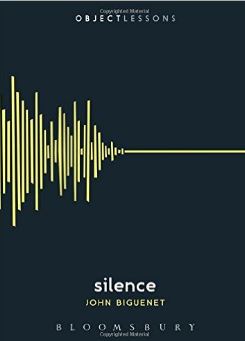
Then I came across this passage in Silence by John Biguenet from the intriguing Object Lessons series, reproduced in part here:

"We have grown quite comfortable with the modern unraveling of the distinction between the visible and the invisible. Just as we believe in the existence of a silent reality - in the efficacy of a dog whistle, for example, inaudibly screeching its signal to a floppy-eared pet - we accept the existence of hadrons and the quarks of which they are constituted. Our scientists have persuaded us that phenomena invisible to our eyes because of optical limitation do, in fact, exist. They confirm that existence through indirect observations, often ingenious in conception.

"So the misplaced faith we once expressed in such common-sense formulas as 'Seeing is believing' yields to a modern belief in things unseen - a world beyond the senses. We do not dispute, for example, the underlying fabric of matter - woven of invisible protons, neutrons, and electrons, we believe, but utterly fantastic without the mathematics to support our belief.


"And this extension of the natural world to incorporate the unseen and the unheard proliferates even as modernity wars relentlessly against other forms of invisibility and inaudibility, now routinely dismissed as the supernatural. We are expected to acknowledge the existence of radiation pulsing from the center of our galaxy that we neither see nor hear but nontheless measure with a radio telescope, a device whose very name suggests the unity of the reality unperceived by our eyes or ears. At the same time, growing popular opinion regards necromancers as charlatans and belief in ghosts as symptomatic of psychological affliction.

"All this is no doubt easy to accept until one attempts to distinguish the unseen and the unheard we ridicule from that which we worship. For example, what sets apart the adepts of the occult from the clergy of established religions? If we press further into this dilemma, we may well ask whether Jeanne d'Arc, a saint listed in the Martyrology of the Catholic Church, responded to heavenly voices or whether she suffered from auditory hallucinations, commonly associated by mental health experts today with schizophrenia and psychosis?

"It would, of course, be presumptuous to answer for the reader such questions. But it is difficult to dispute our current readiness to concede the reality of a universe of unheard and unseen phenomena discovered in only the last few hundred years while debating (and increasingly rejecting) the existence of other phenomena also beyond the scope of our senses, and yet nearly universally accepted for millenia.

"On the one hand, we have learned to surpass our senses, discovering what had been beyond our ken. On the other hand, as a result of our success in devising protocols to verify that knowledge, we grow skeptical of belief in the imperceptible that resists our methods of confirmation."

SCIENCE AND RELIGION

Ancient caveman must have had their minds blown away by fire, the stars and moon at night, rainbows, lightning, hailstorms, magnetism, wind and waves. Later civilisations would have been astonished by the human development of manmade power, electricity, radio and TV, and flight. Our grandparents would not have believed the internet.

As humans and scientific explanation evolves such things in turn became taken for granted. But have we reached a point now where everything has been discovered, and everything discovered is now explainable? Or are there some things science has got wrong, and many things science just can't explain or hasn't discovered yet? At each stage in history did we make the same mistake of believing we knew it all?

The arrogance of the present human race to believe that we've reached the point where we can understand and can explain everything is frankly misguided at best and ridiculous at worse. And to believe we have "suddenly" reached this plateau of understanding and mastery over nature and the universe, only in the last 50 or 100 years - after 2 million years of evolution - is statistically very unlikely.

Science has now assumed the authority religion once held in many cultures - scientists are the new gods able to dismiss unbelievers as religious nuts, bad science advocates, or snake oil salesmen - modern day heretics if you like. Modern man is more willing to put his faith in science than myth, magic or religion. Similar could be said of a particular branch of science - modern western medicine - an industry generally unwilling to accept possible alternatives, some that have been practised for 1,000s of years in other cultures.


Biguelet again... "A Harris Poll, conducted in late 2013, found belief in God, for example, had fallen from 82% to 75% among US adults in just four years, with similar declines in belief in miracles, heaven, and the afterlife of the soul, angels and devils, and witches. If more concrete evidence is wanted The Wall Street Journal noted in a 2015 article that Dutch ecclesiastical authorities anticipate shuttering nearly 1,100 of the country's 1,600 Catholic churches in the next decade and 700 Protestant churches within the next four years. Germany has closed 515 churches in the past decade while 200 Danish churches are viewed as unsustainable."

But does modern science deserve this new found ascendancy when so much of our amazing world can not be scientifically verified? Just because something is not scientifically proven does not mean it is invalid, untrue, or non-existent.


Thursday, 17 March 2016

You've Gotta Be Hungry!

Nicki Edgell
Brilliant motivational speech from Les Brown on how it can take a number of nos before the yes comes!


https://www.youtube.com/watch?v=JtZSBZbgHUQ

Powered by Blogger.

Statutory Notice: Although every effort is made to keep this information accurate and up to date this is not an official Nikken website. Registered trademarks® of Nikken appear throughout this site. Our Independent Nikken Consultants do not make any medical claims. Nikken products are not medical devices and may not be recommended to treat specific medical conditions. People who are in their first 3 months of pregnancy, or who have a pacemaker, health problem or electronic device (either implanted or external) should consult their doctor or manufacturer of the device before using magnetic products. Do not place Nikken's magnetic products in direct contact with magnetically sensitive items such as watches, video and audiotapes, computer discs, credit cards and portable electronic equipment. It is illegal for a promoter or a participant in a trading scheme to persuade anyone to make a payment by promising benefits from getting others to join a scheme. Do not be misled by claims that high earnings are easily achieved. Any personal data is not shared. Newsletter or blog followers can opt out at any time. If you sign up for my newsletter, which is administered through Mailchimp, I will store some of your information, including your email address, and certain information about the links you click within the emails I send you, on a Mailchimp server. Neither I nor Mailchimp will ever sell your email address or share it with any other party.