Showing posts with label self-development. Show all posts

Tuesday, 31 December 2019

How To Set New Year's Resolutions That Actually Work

Nicki Edgell


It's that time of year when thoughts turn to the future and new beginnings. Typically these thoughts are formulated by setting plans and resolutions for the new year. Also typically these resolutions tend to turn to nothing after a few weeks or even days.

Reasons Our Resolutions Fail

There are many reasons why such good intentions may fail including:

1. Unrealistic Goals - be sure to make your aim relatively easy and not too time consuming. If you achieve this aim easily enough you can always add to it later on.

2. Attempting Too Many Things At Once - this is linked to having unrealistic goals. Many people having not taken on any new challenges all year think it is feasible they can suddenly do 3 or 4 new things all at once. Not satisfied with aiming to lose weight, they also attempt to change their job, save money, write a novel, and train for the London Marathon all from Day 1. Once one of these challenges falls by the wayside it is easier for the others to fall off too.

3. Unrealistic Timeframes - again this is linked to the problem above. You may have time to achieve a number of goals through a year, but there is no need to start them all on 1st January. So why not concentrate on just one goal in January, achieve that, and then turn to another afterwards? People think major changes in lifestyle or habit can occur quickly and get despondent without immediate results but it is perseverance that is more important in the long run. Imperceptible daily changes will resolve into something tangible after a few weeks.

4. Lack of Immediate Reward - don't expect immediate benefits. Progress is not always made in a straight upward linear line. You may have setbacks, you may think you are not getting anywhere. It is worth reassessing your goals as you go and making adjustments if necessary, or complete changes, but do give yourself time.

5. Not Allowing Enough Time - this can apply to problem number 4 above with reference to allowing time to notice results or simply the practical ability to dedicate enough time on a daily basis to your resolution. If you are a busy person and you decide you are going to take up jogging where do you think the extra hour a day is going to come from for your training? If you are beginning a novel or starting a gym regime you have to accept that there is only one way to achieve this - you simply have to put in the time. This means removing time from somewhere else, for example commuting, family time, or sleeping. It will obviously be easier to do something that only takes 5 minutes a day and impinges less upon your present commitments.

6. Disconnection With What We Actually Want - think carefully why you really want your goal. Is it the process you will enjoy or the actual outcome, the journey or the destination? - there is a big difference between the final benefit and the means to achieve that benefit. For instance do you want to save more money without any particular cause or is your ultimate aim to go on an exotic holiday next August? The means and the journey is important, and your chances of success are greater if you will enjoy the actual method, but a clear intention towards achieving a result will provide the drive to get the task done. In fact some maintain the intention is the only important part of the left side of this equation ie. I = R where M is zero. In other words if you intend for something it doesn't matter what method you use, you will achieve the result.


Intention + Method = Result

7. Lack of Personal Motivation - make sure you choose something you really want or need. The stronger the desire the stronger the chances of achieving the goal. You have to have a strong personal motivation to achieve your goal. If you are doing something as someone else suggested it, or you just feel you "should" you are more likely to give up early.

8. Non Specific Targets - all the literature on setting goals and aims always stresses that any goal has to be measurable and specific. So instead of a vague notion to "get fit" for example, set a deliberate plan to do 10 press ups a day.

9. Relying on Others - although it can sometimes be useful to publicise your goal and/or work together in a group this does lay you open to others' whims. If your goal relies on someone else also doing the same thing your challenge could fail for practical reasons (the lift to the gym you rely on fails to turn up) or personal reasons (your friend's circumstances change and they can't continue).

10. Procrastination - some potential new resolution makers feel unable to take action until all the conditions are perfect, for example: "I'll start running when I get those running shoes" or "I'll launch my new business when my new website is up". There can also be deflection of the actual task in hand whereby people deceive themselves into believing the laying of the ground work (such as purchasing the running shoes) fulfils the task rather than actually starting the real task (the actual running). It helps to accept that conditions are never perfect and you are better off just starting. Then by the time conditions become perfect (conditions tend to align with you after you have started something anyway) you will find you are already half way there.

Two New Things To Try This New Year (Or Any Other Time!)

1. Think in 30 Day Blocks

This is one of the most powerful tools I've ever used to achieve things. Once you commit to a goal resolve to stick to it for 30 days. Mark the start date in your calendar or diary, and the end date. Tick off the intervening dates if this helps.

If you miss a day start again with a new 30 days (but you'll find this is actually rare). The interesting thing about setting the 30 day goal is your mind becomes immediately conditioned and does not forget.


When you get to the end of the 30 days readjust the goal, start a new one, or simply carry on! But be sure to set a new timetable - again in blocks of 30 days (so for some goals you may set a 60 or 90 day challenge, although I would recommend you break down the more long term goals into 30 day sections anyway).

As an example, say if you want to write something like a short story or even a novel, you make sure you do that, every day! It doesn't matter if you do it at 6am or 11.55pm, but you must write at least a sentence every day. Tick!

The increments may seem small but it is the compounded accumulative effect which counts.

80 percent of success is showing up
Woody Allen

If your challenge is to get fit by running set a specific challenge to run around the block once a day. This may only take two minutes so can easily be done first thing in the morning before work (or possibly on the way to work?), or last thing at night, or at a number of opportunities during the day. You will feel the benefit after only a week. After 30 days adjust the challenge to twice round the block for the next 30 days.


For fitness challenges like this I do advocate forms of HIT training (high intensity training). Not only does it take a lot less time, science has shown it generally gives us more health benefits too. So why jog for an hour and a half a day when a sprint up a hill in 30 seconds achieves as much? A good HIT technique to try is 8 on/off sprints/walks. So you walk for 30 seconds, sprint for 30 seconds, walk again etc (repeat 4 times).

The 30 days represents a significant challenge, but is also realistic and does not appear too far into the distance or unattainable. This timeframe also fits in with "The 21/90 Rule" which says that if you commit to a personal or professional goal for 21 straight days, after three weeks, the pursuit of that goal should have become a habit. Once you’ve established that habit, you continue to do it for another 90 days. If you can keep up something for three weeks and then ninety days, then it should become a permanent lifestyle change.

2. It Doesn't Have To Be New Year's Day

Finally although it is New Year's Eve right now, at the time of writing, I hope people read this throughout the year and take action whatever time of year it is. It doesn't actually matter when you decide to do something. There may be some small psychological power to certain times of the year, such as New Year, the Solstice, your birthday, but this energy may not actually be helpful. It could actually add stress or peer pressure unnecessarily. If you have a good idea for a plan whenever it occurs, just do it, right then, right now.


Just decide and start immediately. Now, today. There is no good reason why any decision to change something or do something different needs to be associated with one day of the year. What if a new idea comes to you on 24th October? - it would plainly be ridiculous to wait another two months to take action. What if it happens on 3rd January? - you haven't really missed the boat - there is a boat every day. The 1st January is just an arbitrary man made construct. As is midnight on the 31st (if you want to put your clocks forward a couple of hours and celebrate early, and grab an early night, no one is stopping you!).

The key word is action. You can read all the online advice and self help books you like but I don't know any that will actually achieve anything without action on your part. You do need to take responsibility and do something. There isn't a magic bullet.

Take a step towards something you'd like to do by taking some immediate action, however small, today, and go from there. You'll be surprised, it could change your life!


If you enjoyed my post and found it useful you can support my blog below. Many thanks, Nicki

Buy Me a Coffee at ko-fi.com


Wednesday, 20 June 2018

No News is Good News, So Just Avoid It

Nicki Edgell


Mark Twain wrote: “If you don't read the newspaper, you're uninformed. If you read the newspaper, you're mis-informed.”

I'm not sure you are necessarily uninformed if you avoid newspapers any more. It's so much easier to hear about what's going on through numerous sources (even if you don't want to) - TV, radio, friends, parents, internet, social media, and we are now more interactively "in control" of our sources.
I have no idea why there has been such an outcry recently over so called "false" news. There has been plenty of false news for years.
Generally the news is rubbish at best and depressing at worse. It serves little point. It is nearly always bad. Or it's just comment or opinion or gossip. It's a waste of time. It's filtered. It is biased. It has an agenda. It's obsessed with wars and terrorism out of all proportion to the reality of 99.9% of the population. It peddles false flags, fear, negativity, and hate, with dubious motives. It's delivered by the sanctimonious BBC dressed up as impartial public information, or the trash gutter press obsessed with soaps, football, immigration, boobs, bombs and booze.
Frankly the sort of "news" delivered by the gutter press is blatant hate speak and I have no idea why it isn't illegal.
News is everywhere - streamed constantly in train stations, banks, waiting rooms. It's always live! and breaking! and 24/7, but completely disposable, repetitive and boring. Read a newspaper a week, a month, or a year later, and the news won't have changed. Read the same "redtop" each day and the headlines will blatantly be the same day after day imbuing a constant subconcious indoctrination of the readership. I know it is awful what is going on in some places in the world, but there are no refugee camps of terrorist jihadists in my back garden as the Daily Mail would lead me to believe.

There is always a crisis

News keeps us in a state of fear. I don't know why, or even if this is intentional for reasons of elite power and control of the masses, as conspiracy theorists would maintain, or is it just the human condition that we like to be frightened and shocked, like we would be at a horror movie, so we actually like to read about bad stuff happening, to other people... and only by the grace of god not to us, yet?

But here's a thing. News is actually rare - by definition. If these awful things were happening all the time to everybody, everywhere, it wouldn't be news any more, like heart attacks and car crashes (except big ones at weekends when there isn't anything else to report). Despite the apparent proliferation of shocking news, especially it seems in the last couple of years, statistically we still live in the safest time there has ever been in human history.

I used to read a newspaper - many years ago. It was supposed to be good for you. It meant you were knowledgeable about current affairs. I was even asked current affairs questions in interviews.

Not any more. I gave up the news. I realised it was just depressing and irrelevant. If you want to be optimistic and positive surround yourself with optimism and positivity. Ignore the news. Spend the time doing something rewarding.

Please have a watch of this excellent TED talk by Brighton resident Dr. Bramwell.


Like this post? Sign up to receive new posts direct to your email inbox.


Sunday, 4 March 2018

Humans Being More

Nicki Edgell

Nikken offers an annual one day self improvement and life coaching training known as Humans Being More.  At only £50 for the day this is an incredibly good value course. Coming up in three weeks on the 25th March this is an amazing opportunity to take control of your life.

Make a decision today to invest in yourself and your future!

Date: 25th March 2018
Time: 10am, all day
Location: Aurora Hotel, Crawley, UK
Attendees: Approx. 30
Cost: £50
To book: Please call Nicki on (0044)7786 405366
Open to All

Please note this course is run by Nikken but is open and relevant to all. You will come away inspired and motivated to achieve your life goals whatever they may be.


Humans Being More training is an opportunity to connect with your very best self and make those choices that will create the results you most seek in life. In one information and energy packed day, you will have the opportunity to create a road map for an abundance of balance and success in the coming year.

The workshop focuses on the following ideas:

1. Exploring your own life direction and core beliefs.
2. Discovering the power of committed choices.
3. Improving your communication skills.
4. Eliminating limiting beliefs and reaching your full potential.
5. Developing empowering beliefs that support your choices.
6. Creating plans of actions that are comprehensive.
7. Getting clarity about, and choosing, the results that matter most.

Sections of the class:

1. Creating additional balance in life in The Five Pillars of Health (5 areas of life priorities).
2. Identifying new results in each of the five pillars that would create more satisfaction in life.
3. Setting realistic, attainable, motivating goals based on those chosen results.
4. Increasing ones commitment to those things that matter most.
5. Focusing on the values that will most powerfully support you in achieving results.
6. Understanding the benefit of support from others in creating your best life.

The workshop uses a variety of devices from partner work, groups discussions, storytelling, interactive games, and personal contemplation in order to meet the objective of re-introducing you to the very best of yourself and creating the future that would be most fulfilling.

"I came away from the HBM training with a 90 day goal to self-publish my first short story. This I achieved followed by 3 more in the next 90 days!" JE, Brighton

Not sure? Have a listen below to Mr "The Secret" himself, Bob Proctor, on what he thinks of the HBM training.


Take action today and come and join me on this life enhancing training this month!

Monday, 11 December 2017

Getting Paid Your Worth - 3 Big Secrets

Nicki Edgell

I am grateful to my colleague Caroline Rushworth for this guest post. Caroline can be contacted at her newly launched website www.carolinerushforth.com


The topic of money is a sensitive subject which affects each of us in different ways, but the relationship we have with prosperity is down to something we all have in common: our deeply rooted beliefs and the relationship we have with ourselves.

Throughout my coaching and training experience, I have witnessed both ends of the abundance spectrum. I have seen people persevere and succeed in reaching their goals and go on to be very successful in their business or chosen career. I have also seen many fall flat on their face, walking away feeling deflated and worthless. The good news is that we can all be successful – but there are just a few things you should be aware of first.


Big Secret Number 1:
You are to blame for the relationship you have with money


When you think about your past, what stories do you tell yourself and others about your childhood and money? Do you tell people that you had abundance or scarcity? Perhaps you think about the times where there wasn’t enough food or perhaps your parents didn’t buy things for you. All of these experiences will have an impact on how you relate to money and success in the present day.

When we were young we looked to our support network of family, friends and teachers as role
models, gently absorbing their beliefs and values so we could form an identity. As we developed we began to have new experiences that were either harmonious to our growth or detrimental, causing us to form additional personal beliefs according to our experiences. A mixture of these beliefs and values form who we are today and they shape our attitude towards money as adults.

Do any of these beliefs sound familiar?

  • I have to work hard to gain money
  • I don’t deserve to have money
  • Money causes pain and suffering
  • I never have enough money
  • I can’t afford to spend money
  • Money never comes to me
  • I always have bad luck with money
  • Wealthy people are lucky
  • I am not worthy of being wealthy
  • Money causes arguments
  • I must work in a job I dislike to have money

These are referred to as ‘limiting beliefs’: they are beliefs that we hold close but they have a negative impact on our attitude towards money. Although these limiting beliefs can feel very real and true, they cause us to feel restricted in our relationship with prosperity. The same thing applies to any negative belief you have in your mind: the more negatively you perceive something, the harder it is to be flexible to opportunities for personal change.

Your beliefs and values can change at any time, but it is down to you to transform them if you are to have a more balanced and harmonious relationship with money. We are constantly reminded that abundance and prosperity is relative to our state of mind, so if you feel that you lack or struggle to obtain money, then a bit of mind re-tuning may be in order.

To learn more about your behaviours around money, take a piece of paper and some quiet time
and write down your honest answers to the following questions:

  • Describe your spending habits. Are you an impulsive spender or a careful controller?
  • Do you look to material possessions to lift your mood?
  • How do you react to other people’s wealth?
  • Do you find yourself spewing venom at anyone who is financially better off?
  • How does it make you feel to receive money – from friends, family, clients or customers?
  • Do you feel any resistance to giving money out?
  • How does it feel when you pay your bills?
  • Would you say you are lucky or unlucky with money? Why do you think that?

Many successful entrepreneurs know what it is to live a life of poverty. Some have come from homelessness or pulled themselves out of dysfunctional family situations. But their success hasn’t been down to simple luck; they changed their attitude and created a vision for themselves. An attitude shift can happen at any moment for anyone with the right mindset.

Taking the above beliefs, you can get into a habit of changing a few words around so the beliefs no longer seem limiting. To show you how this works, here are the same old limiting beliefs reframed as empowering, positive beliefs:

OLD LIMITING BELIEFS / NEW POSITIVE BELIEFS

I have to work hard to gain money / I allow success into my life
I don’t deserve to have money / I deserve to have money
Money causes pain and suffering / Money creates happiness and joy
I never have enough money / I can have enough money if I choose to
I can’t afford to spend money / I can spend money wisely
Money never comes to me / Money is OK for me to have
I always have bad luck with money / I trust myself with money
Wealthy people are lucky / It is OK for other people to have money
I am not worthy of being wealthy / I am equal to anyone else
Money causes arguments / Money allows me freedom and choice
I must work in a job I dislike to have money / I can make money doing what I love

A simple change in how you say things in your mind or out loud has a positive impact on your
mindset. That way, you can allow the thought to come, but without the feelings of guilt that may
have accompanied it before.

Big Secret Number 2:
You are worth it, you just don’t realise it yet


If you want to be successful in your business or career, it’s not someone else’s job to create your success; it’s down to you. In addition, if you don’t believe in yourself or your product or service, why should anyone else? Whether you want to get more clients or climb the career ladder, it’s your responsibility to make it happen.

Does any of this negative self-talk sound familiar to you?

  • I never get offered a pay rise
  • I don’t deserve money
  • They can’t afford to pay me
  • I’m not worth the money
  • They won’t like my product/service
  • My product is not good enough
  • I am not good enough
  • I feel guilty asking for payment
  • I am embarrassed to ask for more
  • I deserve more recognition

If you added up all the time and money you’d spent on your own personal investment into your skills and knowledge and into creating your product or service, how many hours would it come to? This is something people tend to forget but it is highly relevant, whether you have your own business or you are working for someone else.

Here are some reminders to help you feel more worthy of getting the financial reward you deserve:

Your time is worth money
Whether you have dedicated some of your life to self-development, university or employment to
up-skill, remind yourself how much time throughout your life you have invested into cultivating a
skill or expertise, and that you have created something of commercial value.

Money is an energy exchange
Sometimes we can complete an energy exchange by doing something else in return, but
essentially money allows us to buy nice things and enjoy a more comfortable life. Each time
we part with our money we are investing in someone else’s livelihood, and then they invest in
someone else after that.

It’s good practice to drill down and discover what having more money would do for you. Before
he was famous, actor Jim Carey wrote himself a cheque for 10 Million Dollars for “services rendered”. He is now one of the wealthiest and most famous actors in the world! Decide on a figure of money you want to have and write down all the things you would spend the money on, so you can start to bring in the essence with your ideas.

Ask for a pay rise
All successful business owners are driven by similar values – such as money, success, achievement and leadership. Whether you work for someone who is a senior manager, director or even the CEO of a company, or you work directly for the business owner, they all have something in common: they make money for the business. Business drives the economy; it pays for our survival and gives us more freedom to do the things we want to do. Every business owner will want the best, highest performing people working for him.

If this sounds like you, ask yourself: when was the last time you had a pay rise? Similarly, when
was the last time you asked for a pay rise? Notice the difference in your neurology when you think
about asking for money as opposed to having it offered to you. There are many ways you can be
proactive in asking for a pay rise and successfully achieving it!

Give your customers what they want
An artist selling her artwork may feel that because she has a natural talent for something, she is not deserving of reasonable payment for her work. But if you were a passionate advocate of art and beautiful pictures made your house look nice and brought your family great happiness, how much would you be willing to pay for an amazing painting to grace your walls?

Customers buy your product or service because it will benefit them in some way and it will turn a
problem into a solution. They could be investing in themselves, giving a gift or helping to change the way they feel. They need and want what you have, so why keep it to yourself? Tell the world about your gift. Your skills and expertise are no use tucked away in a cupboard or stuffed to the back of your mind.


Big Secret Number 3:
Your own self-belief and confidence have an impact on your success


For most people, the essence of success manifests itself in a feeling of self-love, self-esteem or self-worth. If you say to yourself “I am successful”, how does it feel? As you acknowledge your success it
becomes easier to view yourself as successful. So, if you tend to lean more towards focusing on all the things you didn’t get right or where you made mistakes, you will view yourself as not good enough, or even as a failure.

As you bring the feeling of success into your body more frequently, this feeling will draw further success to you in every area of your life. Appreciate where you are now and focus on how far you have come already in the amazing university of life! The more you acknowledge your success, the more you will build upon it.

You can change your mindset
The way you interact with your inner world and outer world makes a big difference to how
success finds its way to you.

Logic will get you from A to Z but imagination will get you everywhere.
Albert Einstein 

Your subconscious mind is a powerful driving machine. It has complete control over your behaviours, emotions and mindset and takes you towards more of what you think about. If you’re grumpy and constantly picking out the flaws in what isn’t working in your life, your subconscious mind will take that as your reality and bring you more of it. So, if you are a natural pessimist, perhaps it’s time to consider doing something differently. You may want to start by paying attention to your own personal navigation system, also known as your emotions. Learn to listen to your mind and body because when you tune in you will notice how much energy and enthusiasm you have for the day ahead. If you’re feeling flat and unfulfilled, your day will continue with the same energy output and attract it in. If you’re feeling broke and financially restricted, think about what you could do that enriches you that doesn’t cost anything, so you can get into a routine of changing your state of mind.

One of the most effective things you can do is focus on what is working well for you and consider
all the things you have already that many others don’t.

Get into the gratitude habit
The more gratitude you have, the more rooted and positive your body will feel, which has an
impact on your mindset too. Ultimately, this all contributes to the energy of money coming in and
out of your life.

To get into the flow of bringing more abundance into your life, it’s useful to create a habit of
reminding yourself about what you DO have already and why you are grateful. Then write out a
daily or monthly list of the things you would like. Tune in and discover what essence having those
things will bring you, then begin to behave in a way as though you already have it. To get you
started, write down ten things you are grateful for today:

10 things I am grateful for today are:
1. _______________________________________________________
2. _______________________________________________________
3. _______________________________________________________
4. _______________________________________________________
5. _______________________________________________________
6. _______________________________________________________
7. _______________________________________________________
8. _______________________________________________________
9. _______________________________________________________
10. ______________________________________________________


6 things I would like this month are:
_________________________________________________________
_________________________________________________________
_________________________________________________________
_________________________________________________________
_________________________________________________________
_________________________________________________________

Having these things will make me feel:
_____________________________________________________________________________________________________________________________________________________________________________________________________________________________________________________________________________________________________________________________________________________________________________________________________________________


I really hope that you have found this article useful. If you have any questions or would like help
in transforming your business, uplifting your career or changing your relationship with money,
feel free to get in touch.


caroline@carolinerushforth.com

+44 7881 99 88 16

Caroline Rushforth trained at the University of California in NLP (Neuro Linguistic Programming) and is a successful Wingwave® and NLP Coach. From her base in East Sussex, Caroline provides one-to-one coaching and transformational work either face to face or via Skype, both nationally and internationally.


Sunday, 12 November 2017

Why Faith is Replacing Knowledge

Nicki Edgell

An earlier post inspired by the Silence book by John Biguenet asked Does Science Explain Everything?

The other day I picked up some books that were being recycled - ie. the previous owner had put a box out on the street in front of their house (this happens all the time in our town). As often happens by coincidence one of them was a book that someone had recently recommended to me. #theuniverseprovides!

Also in the box was a black hard backed pocket book entitled The Decision Book - Fifty Models for Strategic Thinking by Roman Tschäppeler and Mikael Krogerus.

This book is a quick read divided into four sections - How to Improve Yourself, How to Understand Yourself Better, How to Understand Others Better, and How To Improve Others.

Within the How to Understand Others Better section was an essay entitled The Black Box Model: Why Faith is Replacing Knowledge.

It goes something like this...

The world is getting more complicated. There is no way we can keep up, especially with technological advance. The amount we really know and understand decreases relatively all the time.

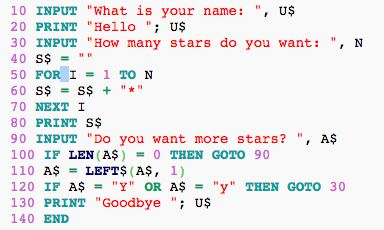
Say in the 1980s when computers first arrived on the scene teachers could still seek to explain how they actually worked. Many of us were taught the principles of binary code (via the on/off switch analogy) and some of us would have done a BASIC language coding course... if not.. then... go to... repeat etc.

Early "Basic" computer coding example
At school we probably learnt the basics of electrical circuits and how the planets circle the sun in our solar system. We would have learnt about sound waves and light, chemical reactions and biological reproduction. However if a sudden apocalypse were to be visited upon us there wouldn't be many of us able to actually put any of these principles into practice to rebuild our society (apart from the biological reproduction that is!). 


Technology has now sprinted ahead and is even racing towards AI where it's development itself will eventually become independent of any human intervention at all - the stuff of numerous dystopian science fiction scenarios!

The very intelligent and scheming android in the Ex Machina film as played by Alicia Vikander
We can't really possibly understand the workings of mobile phones and ipads. We just take all these things for granted. Such things, which would have been completely unimaginable to our grandparents, are now so ubiquitous we have no other choice. 

Our world has changed so much in the last century after relatively little "progress" in the previous millennia (the word "progress" in quotation marks as it hasn't all been for the good of course). It is now unimaginable to us how it will change further in the next 50 years - if indeed this acceleration is sustainable at all.

We are increasingly surrounded by what the authors term "black boxes", complex constructs that we do not understand even if they are explained to us. We can not comprehend the inner processes of a black box, but none the less we integrate their inputs and outputs into our decision making.

Basically we have to believe certain things, even if we can't understand them. As a result we are tending to assign more importance to those that can explain something rather than to their actual explanation.


The conclusion is that in the future it will be the norm to convince people with images and emotions rather than with arguments. Influencers will be the ones that can present and convince, not necessarily the scientists.

People no longer have the understanding or time to be experts in everything.

In my world of "alternative" health there are those that want to know all the science and empirical evidence and there are those that just want to trust that they will feel better. With increasing regulation of the industry many practitioners are beginning to concentrate on the latter, and that suits many consumers just fine.

It will become the norm to convince people with images and emotions rather than with arguments.

As one prominent leader in the field likes to answer when questioned "How does it work?" he simply says "Very well."


Wednesday, 18 October 2017

Nikken's Founder Isamu Masuda, and The Five Pillars of Health

Nicki Edgell

Nikken was borne out of an idea that occurred to Isamu Masuda back in the early 70s. Seeking cash to help his handicapped son, the young Japanese shop assistant hit upon the idea of putting magnets in people’s shoes – and created a business empire.

Magnets? It all sounded so weird, as strange stories spread about astronauts using magnets in outer space to stay healthy, and self-styled experts peddled fanciful theories about why magnets have healing powers. It turned out that NASA really does put magnets in astronauts’ suits, and magnets have been used therapeutically for thousands of years...

Isamu Masuda is now a slim man in his 70s who glows with health and exudes warmth. However it wasn't always like that - he was a sickly child from a poor family, with chronic hepatitis. His father died in the Second World War and his mother managed a small shop. At 18, Masuda found a job with a bus company and over the next few years worked his way up from washing buses to being a desk clerk. At 27 he met and married his wife Fumie, who was working as a travel guide.

Obsessed with health, he worked part-time in a health shop, and the chances are he would have continued in this ordinary anonymous way, had not his son, Koji, been born with a tragic handicap. Doctors couldn’t explain why Koji had been born with this extreme defect.  Isamu was devastated and, still sickly himself, was galvanized into action.

He decided, simply, that he had to make money:
“The doctors said it would be very expensive for Koji to have an operation and I had nothing.”
But he also wanted to do it in a way that would help others as well:
“I started thinking about how we use pebbles in our public hot baths. When you walk on them they stimulate the soles of your feet.  I knew magnets were therapeutic.  In Japan we’ve used them for thousands of years to help healing.  I put the ideas together and made a magnetic insole for a shoe.”
He began to sell his insoles door to door. There was immediate success. His customers claimed they felt better.  Their circulation improved, they had fewer illnesses; even chronic insomniacs began to sleep through the night.
“There were many problems and difficulties to face, but what drove me on and gave me courage was Koji. I had a vision. I was 100% certain that one day, people everywhere in the world, would be walking on my insoles. I knew I could do it, but I had no idea how.”
He approached Katsumasa Isobe, a financier, who remembers those early meetings:
“Isamu was not well. He coughed and looked awful but he had a good idea so I supported it.” 
...and by the time Koji was two, Isamu could afford the medical treatments his son needed.

As part of the Japanese tradition of holistic medicine, Isobe and Masuda expanded the business without worrying too much about why the insoles actually helped people to feel better. They were circumspect, making no medical claims, and never saying they could cure the sick – only that their magnets would give energy, and promote health and well-being.

For the first three years Nikken sold only insoles. Soon the product line and geographical reach was extended first by distributors in Taiwan, China and Thailand, swiftly followed by management staff setting up offices and factories. Nikken became one of the fastest growing companies in Japan's history and by 1993 had moved into 12 countries.

As Nikken expanded, Isamu Masuda mused that physical health was not enough on its own:
“There are five pillars of ‘wellness’. You must also be healthy in your mind, in your close relationships, in finances and in your connections with your community to experience total ‘wellness’.”
Because his own life had been filled with health challenges, this visionary father, like many Nikken consultants since, determined within himself to find an answer that would provide his family with both the money it needed, and the health he himself had been deprived of as a child.

Nikken was built on Masuda's original magnetic insoles invention. Today Nikken still supplies the latest in advanced magnetic insoles. Click on the banner below to visit my dedicated website>>


Adapted from a story by Sam Westmacott via www.theroyalalliance.com

Wednesday, 20 September 2017

Become an Abundance Activator

Nicki Edgell

How can you activate a wealthy life?


After the Summer Holidays and with September’s fresh new beginnings it’s a great time to press the START button.

The word ‘wealth’ comes from the old English ‘weal’, which means ‘wealth, welfare, and wellbeing’. Weal is in turn related to the older word ‘wel’, meaning ‘in a state of good fortune, welfare, or happiness’. ‘Wel’ then became ‘welth’ around 1250 AD, and ‘welthi’ a century or so later. By 1430 it seems to have settled around the idea of riches and prosperity, leaving behind the wider meaning of general wellbeing and health.

When you now say someone "has a wealth of talent”, you are referring to the quality of  their inner gifts as being abundant. So think of wealth as an expansive, enriching quality.

Here are 5 tips to help you line up positive, wealthy energy on a daily basis:

1. Learn to say NO.


People who are wealthy understand what to eliminate. They discard anything that does not matter, getting rid of what does not enhance their life. Like wasting countless hours online, putting energy into negative relationships, continuing bad habits at home.


2. Take enormous ACTION


After saying NO to letting those things and people into your life, put your energy into areas that really count. You must take action. Don’t just dream about it and talk about it. DO it. Get outside your comfort zone. Go ahead and make mistakes – unless you take action you will have no momentum and no feedback to help you adjust the trajectory of your success. Plus you’ll be in the same place 12 months down the road…Actually taking action is the key ingredient many people miss out in self-development pursuits.
I remember asking a friend once whether a particular self-help book actually worked. She said possibly but you had to actually do stuff (not just read it)!

3. Invest in RELATIONSHIPS


Your soul family is a powerful network that impacts your wisdom, health, and your energy. You can’t do it alone. Nurture your network. And remember, relationships thrive, when you’re being of service in some way.

4. Elevate Your EXPERTISE


Eliminating what is superfluous, taking enormous action and investing in relationships will only get you so far, if you lack the skills necessary in your niche. Acquiring a toolbox of knowledge is integral to your success. Be a student. Find a mentor. When you need to know something, take a course.


5. Pay it FORWARD


"Paying it forward" means to pass on a good deed to a new person rather than returning the favour to the original source. When you find your stride and have elevated your expertise, be open to teach your wisdom and skills to those who are less experienced and open to grow. Paying it forward is a sharing of positive energy – creating a beautiful ripple effect and wonderful energy exchange between you and the Universe.

By adding value everywhere and with everyone, you are feeling and doing GOOD.

You open unlimited opportunities in your life.

You become an Abundance Activator.

Words adapted from a post by Wealth Astrologer Tania Gabrielle

Thursday, 9 March 2017

Five Ways to Break Your Phone Addiction

Nicki Edgell


How long do you think the average work email goes unread? An hour? 10 minutes? 5 minutes? 1 minute? Try 6 seconds!

70 percent of office emails are read within six seconds of arriving.

Instead of improving our lives, technology is increasingly getting in the way of enjoying our lives. And the biggest source of trouble is the smartphone.

Some might say that they are not addicted to technology — they just enjoy it. But those same people probably say things like, “I wish I had more time to do the things I love.”


People average 3 hours a day on their phones - for the younger generation this is at the conservative end of the scale. In the pre-smartphone era that number was less than 20 minutes.

When asked whether they would prefer to have a broken bone or a broken phone 46% of young adults opted for the former.

Is Phone Use Really an Addiction?


Addiction is about soothing psychological distress. It’s using something to cope with a problem in life. You only develop an addiction when there is some psychological motive that hasn’t been fulfilled: loneliness, bullying, heartache or tragedy, or simply the inability to make good things happen in your life. It doesn’t actually matter what you use to soothe that addiction, whether it’s playing a particular game that lulls you into a distracted state or whether it’s taking a drug.

In terms of soothing those psychological ills, behaviour and substance addictions are very similar. We live in an age of anxiety. Phones are a way to soothe that anxiety. But they can also add to that anxiety. Some researchers refer to smartphones as “adult pacifiers.” We get cranky, bored, or distressed and the pacifier soothes us. But it's only a temporary fix and the more we use it, the more we need it.

Often when we spend an evening watching mindless reality TV or on Social Media the pleasure is extremely fleeting often leaving us with a feeling of a missed opportunity or having wasted our time. We sort of know we would have gained more from reading a book, concentrating on a good film or sharing a meal with a loved one in person, but we can't help it!

Have a look at this fascinating infographic courtesy www.timewellspent.io - it shows that the Apps deliberately designed to use up more of our time are also the ones that make us the most unhappiest! Go figure!


So it is hard, we are all battling an addiction. Technology like the smartphone can't be disinvented but how can we use this technology to actually enhance our lives rather than detract from them? Read on to discover some practical tips:

5 Tips for Breaking the Habit

1) Say Don't Instead of Can't


When you make the commitment to change, tell yourself, “I don’t check my phone more than once an hour” as opposed to, “I can’t check my phone more than once an hour.”

Don’t is a declarative statement about what kind of a person you are. When you say you don’t do something you give yourself the power to have made the decision not to do that thing. When you say can’t it feels as though some external force is telling you that you shouldn’t be doing this thing. The way human motivation and decision making works is that we do much better when it’s something that feels like it has arisen within us. We don’t like being told what we can and can’t do.

Studies have shown that people stating that they can't do something were only successful 10% of the time, whereas those stating that they don't do something were 80% likely to follow through. 

There are various other language tricks you can employ to empower your decisions. Use firm "I" and "do" and "will" words rather than vaguer words like "might" "try" "maybe" and "think". How much more powerful is it to say "I will do that on Monday" rather than "We think we might try to do that sometime"? Be definite and commit.

2) Proximity Is Destiny


When you don’t absolutely have to have your phone by your side, put it somewhere you can’t easily reach it. In a different room or at least out of reach.

Just by making it that little bit more difficult to do something, we will do it less. 

Design your environment to maximise your well-being. One way to do this is to ensure your addictive temptation is far away. So if there’s something that you keep doing obsessively (whether it's a phone, going to the biscuit tin, or the TV remote) make sure that it’s not in your immediate environment and you’re less likely to do it. That’s a much more effective way of preventing yourself from using it than say keeping it nearby but trying to just suppress the desire to use it.

This is one time when our natural inertia and laziness works in our favour.

Technology can be a great tool if you use it. If it uses you it can lead to problems.

If you absolutely need your phone nearby, turn off all non-essential notifications, or turn the power off altogether and just turn it on periodically. When it's on turn off the “ding” sound when you get a text message so that instead of your phone shouting constantly, “Hey, check me now,” you decide when it’s time to check. You’re removing the control from the phone and you’re bringing it back to yourself.

Anti-social media

3) Use A Stopping Rule


Ever said you’re going to “just check your phone quickly” — and then an hour goes by? You check email, Facebook, Twitter, and Instagram… and by the time you’ve done all that, it’s time to check email, Facebook, Twitter, and Instagram again.

Researchers term this the “ludic loop.” It’s what slot machines and online gambling websites are designed to produce. The “ludic loop” is the phenomenon that when you’re engaged in an addictive experience, you are lulled into an almost hypnotic state of tranquility where you just keep doing the same thing over and over again. It becomes so comfortable that you don't stop until you are literally shaken out of it.

So what you want to do is make sure you have that interruption planned ahead of time — create stopping rules and frame them with "I don't".

Eg. "I don't watch more than one episode of a show in a row."

"I don't work past 10pm."

"I don't check my emails on the weekend."

Young people today have not known a non-internet world

Even better set a physical timer such as an alarm or an automatic power cut off time for your PC or internet (especially useful for children).

The rule breaks the reverie and makes you think of something else; it gets you outside of the space you’ve been in.


4) Don’t Break Habits. Replace Them.


Proximity is destiny and works both ways. If you want to do something, you have to be in the position to do that thing. If you want to sleep more, you have to be in bed. If you want to get fit at the gym, you have to be at the gym. If you find you read most when you are in the bath, have a bath. If you are constantly late for work set your alarm for quarter an hour earlier and change your mindset from one of having to leave the house by 7.45 say, to one of having to leave your house by 7.30.

So keep things you want to reduce away from you, but at the same time put things you want to encourage near to you. So when you sit on the sofa, make sure the phone is far away AND a book is within reach. So now you’re not just gritting your teeth trying to not check your phone. You’re substituting a good habit for the bad one. When you want to check your phone, you grab a book instead.

Find a behaviour that is a stand-in for the behaviour that you don’t want to be doing. You replace the bad thing that you don't want to be doing with something good that you do want to be doing.

On your phone or tablet hide the time wasting apps away and put the good ones on the front screen.
So when you lift your device without thinking, checking Facebook is a pain while reading books is easy. Checking your phone actually becomes a good thing. Even better, if you want to read more books use a Kindle specifically designed for this purpose where internet browsing is difficult or impossible, rather than a distracting Ipad or phone where the temptation to check the internet will be too much.

If you only really need your phone for texting and phone calls why not bin the smartphone and go back to a basic brick style phone such as the classic Nokia where even photos, let alone internet, are impossible. You'll also save money and enjoy unrivalled battery life - ironically a much smarter phone choice!

The smarter phone is making a comeback

Remember the feelings, memories and satisfaction you have after an evening absorbed in a good book, an album (yes a whole album!), an inspiring film, or a socialable night out with your partner or friends. Or the tangible sense of achievement gained having completed a piece of work, a personal challenge, fixed, started, or learnt something, or just caught up on a good night's sleep. Compare that with the blurred sense of time wasted when an evening is spent on Facebook, or the realisation that your 10,000 tweets (read and remembered by no-one) could have gone towards a 140,000 word novel! Remember this when you are next tempted.

Spending time on Facebook is a bit like eating a Big Mac. It tastes quite nice at the time and there is some instant gratification but five minutes later you feel sick and dirty!


5) Dr. Jekyll, Prepare For Mr. Hyde


In Robert Louis Stevenson's classic tale Dr. Jekyll knows he’s going to turn into a werewolf after nightfall so he barricades the door and chains himself in the basement. This way, when he transforms into the monster, he won’t be able to harm anyone.

Dr. Jekyll knows its coming so can plan ahead

By making smart decisions in anticipation of a problem, you make sure the future-you doesn’t do anything inappropriate like rudely checking your phone in company. Of course it is hard to do the right thing all the time so increase your chances by encouraging your future-self by planning your future environments. If you are going out to a dinner party and you know you are susceptible to the temptation to check your phone at the table every five minutes, leave it in your coat pocket knowing that the lack of proximity will hinder this desire. If you need to keep it on your person just turn the power off.

Have you ever noticed how you keep returning to the biscuit tin knowing there are biscuits in there. Once they have run out your need miraculously disappears.

If you have a sweet tooth and know you easily succumb to the chocolate in the larder take a step back and realise you only eat it as it is there. Next time you are in the supermarket don't buy any and you won't have any in your proximity the next time the temptation arises. Obtaining new chocolate is too much bother.

Sum Up


Tips to help you stop checking your phone:

  • “Don’t” say “Can’t”: You can always check your phone. But you decide to be the kind of person who doesn’t.
  • Proximity is destiny: Put your phone across the room and laziness becomes a superpower.
  • Use a “stopping rule”: Leaving the house with your phone at 5% battery is extreme… but it’ll work.
  • You don’t break habits. You replace them: Good apps up front. Time wasting apps hidden or deleted.
  • Dr. Jekyll, prepare for Mr. Hyde: Give your phone to a friend before you drink so the werewolf can’t drunk-text exes!

Addictions start when there’s a problem in your life you’re struggling to cope with. So checking your phone way too much can be an indicator of something awry. When you have good ways to soothe your worries like good relationships with people you love, you’re less likely to develop behavioural addictions.

Addiction is really about soothing a psychological ill and that’s true no matter what the addiction is. People who have a strong social support network, who have a very full life, tend not to develop addiction. So the long term solution is not about the phone. It’s about getting closer to that special someone and spending more time with them. And letting that bond soothe the worries you’re running to your phone for. So if you are reading this on your phone, text or email that person. Let them know you care. And then don't hang on an answer— put the phone away.


Shared, edited and adapted from Irresistible: Why We Can't Stop Checking, Scrolling, Clicking and Watching by Adam Alter, and This Is How To Stop Checking Your Phone: 5 Secrets From Research by Eric Barker.

To learn more about taking back control from our devices have a look at http://www.timewellspent.io/take-control/ and listen to this brilliant Sam Harris podcast https://www.samharris.org/podcast/item/what-is-technology-doing-to-us


Saturday, 14 January 2017

Brighton Health and Wellness Events - January 2017

Nicki Edgell
I am hosting three events in Brighton in the next couple of weeks which may be of interest. Please get back to me if you would like to come along to any.


Friday 20th Jan, 7.15pm, Hanover Centre - Nutrition Talk with Laughter Yoga
Saturday 21st Jan, 1.45pm, 108 Stanmer Villas - Creating a Life in Balance with Nikken
Sunday 29th Jan, 6.45pm, 365 Ditchling Road - Heart Centred Film Club Night "In Utero"
Details follow:
====================
NUTRITION WITH LAUGHTER with Nicki Edgell and Emma Hiwaizi
FRI Jan 20th, 7.15 - 9.30 pm
Hanover Centre, 33 Southover Street, BN2 9UD
Join us for another evening of stress busting in Brighton with Nicki Edgell and Emma Hiwaizi!

NEW YEAR'S NUTRITION COACHING - GET BACK ON TRACK!:
Want to start the new year by getting back on track with your diet after the festive season? Do you feel totally confused about how to regulate your weight and energy levels? Does the advice you have been given seem to conflict? Do you eat three meals per day or six? Do you detox, fast or never skip a meal? Do you have a low-fat diet or a high-protein diet? Nicki Edgell, our clinical psycho-neuro-immunologist, will talk about the Metabolic Balance and the impact of modern day stress on our metabolism, our weight, our circadian rhythm and our behaviour. Nicki will dispel some myths around what we are to eat for health. She will outline practical ways to restore our natural circadian rhythm and metabolism by making a few simple changes to bring about optimum weight and bundles of energy to have the life you want.

LAUGHTER YOGA:
Laughter Yoga is a unique exercise system which combines deep breathing with laughter exercises. Laughter Yoga was created 18 years ago by an Indian doctor in Mumbai who wanted to share the healing power of laughter with as many people as possible. Sessions include songs, games, laughter exercises, deep breathing and a laughter meditation. Laughter boosts endorphin levels, boosts the immune system, can help to alleviate stress and anxiety and can help us get in touch with the more playful and creative aspects of ourselves... Emma Hiwaizi stumbled on Laughter Yoga by chance - but has found it a profoundly helpful tool for dealing with the stresses and strains of modern life. She is the co-founder of Brighton Laughter Club and has been running regular laughter sessions for almost 4 years. Please wear loose, comfortable clothing!

The Brighton StressBusters Team is looking forward to welcoming you all to this exciting event!

Admission: £5 - includes coffee/tea, biscuits and (as always!) lots of positive energy
Registration starts from 7pm.

P.S. We also hope you'll join us for the last instalment of stress-busting at the pub after the event :)
=========================
NIKKEN PREVIEW with Nicki Edgell and Carmen Vesztergom
Sat 21st Jan, 1.45 - 4 at 108 Stanmer Villas, Brighton, BN1 7HN
Do you want to create a life in Balance, Health and Vitality?


Come and learn about Active Wellness and the Nikken Advantage - choices proven to increase health and vitality, reduce stress, pain, low energy, poor sleep & the effects of environmental stresses.

Come along to experience for yourself technologies to support your health and daily active lifestyle.

Explore a new model for personal economic stability to create the life you love.

Connect with Entrepreneurs who are building a purpose driven community.

The Active Wellness 2017 Nikken Global World Tour is coming to Brighton! Catch the next wave!

" I love this Company for it's philosophy and their amazing technologies which I have been using for 8 years. I hope you'll be able to come along to find out for yourself about these great solutions for generating health and income" Nicki Edgell (energy expert)

FREE EVENT but please RSVP call/text 07786405366. Look forward to seeing you.
====================
IN HOME FILM CLUB NIGHT WITH POST FILM DISCUSSION with Nicki Edgell, Carol Ironside, and Kate Collier
Sunday 29th January 6.45 - 9pm
365 Ditchling Road, Brighton, BN1 6JU

Please join us for our first Heart Centred Film night of 2017 screening the award winning film IN UTERO.

What are the influences that inform how we are formed during the nine months we spend in our mother's womb? Are we who we think we are?

IN UTERO is a cinematic rumination on what will emerge as the most provocative subject of the 21st Century - life in the womb and its lasting impact on human development, human behaviour, and the state of the world. Epigenetics, scientists, psychologists and doctors converge to prove that we are not what we think we are.

IN UTERO brings together for the first time convincing data that explains why some of us face challenges from the start while others thrive.

Prepare to be surprised, intrigued, but no longer baffled by what the future holds for yourself, your loved ones, and the human race.

View trailer here: http://www.inuterofilm.com/

Suggested donation £5 to go to a local homeless charity. Please RSVP to Nicki 07786405366 to reserve your seat and click on the GOING above.
====================================
Nicki Edgell Dip cPNI DNN fntp
Clinical Psycho-neuro-immunologist
Nutritional Therapist
Nikken Wellness Consultant

Sunday, 8 January 2017

New Year's Resolutions and Going Pro

Nicki Edgell

The new year brings with it new year's resolutions for many. Whether these are for improved health and fitness or embarkation upon an academic pursuit our resolve is usually to improve aspects of one's life for the better.

Of course there is no particular reason why anyone need wait for the new year in order to make a resolution, but it is traditionally a time when we have such thoughts - the new year marks the end of a previous year (2016 in this case being a year that many have considered a particularly challenging one on a worldwide scale) and presents an opportunity to begin afresh. The timing therefore helps overcome general inertia and procrastination that tends to exist throughout the year when thoughts turn towards new projects. It also represents a reasonable time separation from the difficult to avoid excesses of Christmas making it a natural time to think of abstaining from alcohol, overeating, and beginning a detox for January if that is your area of resolution.
Only a week into the new year many people will be realising their resolutions may have been too ambitious.
But what if your resolutions are proving too difficult to maintain? In such cases don't beat yourself up too much. Be realistic. Don't give up entirely but scale back and rebuild slowly.

The Plank
For example I started an exercise program (something I had been thinking of doing for many months) - this was actually a 4 week/28 day program that promised to change your body in only ten minutes a day. Stupidly I threw myself straight into it and pulled a muscle in my back on the second day forcing me to abstain for a couple of days. I realised the exercises were extremely difficult for a "beginner" but rather than give up completely I am pursuing the program more gradually; for instance instead of holding a "plank" position for the prescribed 2 minutes (!) I aim for 45 seconds and I'll build from there.
Resolutions can often be strengthened if made public or shared with others.
Incidentally it is also easier to follow such objectives with friends and family. Even if others do not join you in your pursuit, make your resolution public. I invited people to join me on facebook so we could share and support each other. To see how we are all getting on please have a look at my post in my Nutrition and Healing facebook group below...

https://www.facebook.com/groups/291408764209136/

Targets and deadlines are particularly useful drivers for achieving goals. I've spoken about the power of 30 day challenges before. But again, if you have been too ambitious it is not the end of the world to readjust. A couple of years ago I attended an excellent self development course where attendees had to set themselves a 90 day plan with objectives. I did not reach my very ambitious objective after 90 days but extended it and subsequently achieved my aim after 180 days.

The War of Art by Steven Pressfield
Recently I have been reading the War of Art by Steven Pressfield. Pressfield is actually a historical fantasy writer so a lot of the book is written in the context of being a writer, or by extension an artist of some kind, but the philosophies are pretty much applicable to any pursuits. How often do we tell ourselves that we will do this or that, but only once we've done something else or something else has happened? - we will fix the house once we have the money, we will go travelling once our children have left home, I'll be happy once I have a boyfriend, I will write once my summer house is built, I'll travel across America once I've saved for a car, I'll get a new job when I've passed that exam... the list is endless. We put off, delay and procrastinate what we really want to do, because our situation isn't quite right. But guess what, it is never going to be quite right. The secret to pursuing our dreams is to simply start! The great writers and artists did not wait for the perfect environment before they began. The War of Art is all about overcoming such resistance.

Pressfield writes that once a commitment is made to starting, all sorts of things will fall into place - "the moment one definitely commits oneself, then providence moves too. All sorts of things occur to help one that would not otherwise have occurred. A whole stream of events issues from the decision, raising in one's favour all manner of unforeseen incidents and meetings and material assistance which no man would have dreamed would come his way."

But what about waiting for inspiration or your muse or a feeling or a message or epiphany? Don't bother, just get on with it. Put yourself in the position you need to be in order to achieve what you want to do. If you want to write, then get up and sit at your desk and write, every day, religiously, like clockwork.
I write only when inspiration strikes. Fortunately it strikes every morning at nine o'clock sharp.
Treat it as your professional job. Long before you are making any money from your pursuit go pro, and treat it as your profession. Call yourself a writer. Don't say it's just a hobby. "Fake it 'til you make it" as they say. When classic writer Somerset Maugham was asked if he waited for inspiration before he wrote he answered yes, he did, but luckily he found it happened every morning when he went to work!
Get in, and stay in, the game.
Similarly Woody Allen famously said that "80 percent of success is showing up". If you put yourself in the right place to succeed (ie. you simply show up at the right place at the right time) you are half way there (or 80% the way there according to Woody!).
...and a Mind Map based on the War of Art courtesy http://sunnibrown.com

So, if your new year's resolution is to have more sleep then go to bed earlier. If you want to read more books, then guess what, you've got to put the hours in and read more books (instead of watching TV, facebooking, or going out). If you want to spend more time with your children you've got to cut the office hours and be in a position to be around at home when they are. If you'd like a more intimate relationship with your partner you've got to put yourself in the physical location where this has a chance to happen. If you missed new year's day, just start now, don't wait another year! There are sometimes some short cuts and some tricks you can play on your mind, but more often than not you simply just have to make practical changes, apply some will power, and just do it! Setting yourself reasonable specific goals and deadlines will help.

For details of the highly recommended self development course known as Humans Being More please contact me.

Best wishes for a happy and abundant 2017.

Nicki

Powered by Blogger.

Statutory Notice: Although every effort is made to keep this information accurate and up to date this is not an official Nikken website. Registered trademarks® of Nikken appear throughout this site. Our Independent Nikken Consultants do not make any medical claims. Nikken products are not medical devices and may not be recommended to treat specific medical conditions. People who are in their first 3 months of pregnancy, or who have a pacemaker, health problem or electronic device (either implanted or external) should consult their doctor or manufacturer of the device before using magnetic products. Do not place Nikken's magnetic products in direct contact with magnetically sensitive items such as watches, video and audiotapes, computer discs, credit cards and portable electronic equipment. It is illegal for a promoter or a participant in a trading scheme to persuade anyone to make a payment by promising benefits from getting others to join a scheme. Do not be misled by claims that high earnings are easily achieved. Any personal data is not shared. Newsletter or blog followers can opt out at any time. If you sign up for my newsletter, which is administered through Mailchimp, I will store some of your information, including your email address, and certain information about the links you click within the emails I send you, on a Mailchimp server. Neither I nor Mailchimp will ever sell your email address or share it with any other party.