Showing posts with label science. Show all posts

Sunday, 12 November 2017

Why Faith is Replacing Knowledge

Nicki Edgell

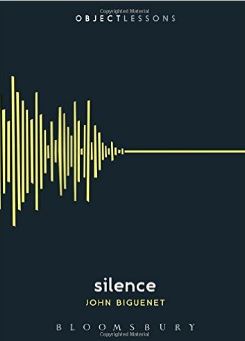
An earlier post inspired by the Silence book by John Biguenet asked Does Science Explain Everything?

The other day I picked up some books that were being recycled - ie. the previous owner had put a box out on the street in front of their house (this happens all the time in our town). As often happens by coincidence one of them was a book that someone had recently recommended to me. #theuniverseprovides!

Also in the box was a black hard backed pocket book entitled The Decision Book - Fifty Models for Strategic Thinking by Roman Tschäppeler and Mikael Krogerus.

This book is a quick read divided into four sections - How to Improve Yourself, How to Understand Yourself Better, How to Understand Others Better, and How To Improve Others.

Within the How to Understand Others Better section was an essay entitled The Black Box Model: Why Faith is Replacing Knowledge.

It goes something like this...

The world is getting more complicated. There is no way we can keep up, especially with technological advance. The amount we really know and understand decreases relatively all the time.

Say in the 1980s when computers first arrived on the scene teachers could still seek to explain how they actually worked. Many of us were taught the principles of binary code (via the on/off switch analogy) and some of us would have done a BASIC language coding course... if not.. then... go to... repeat etc.
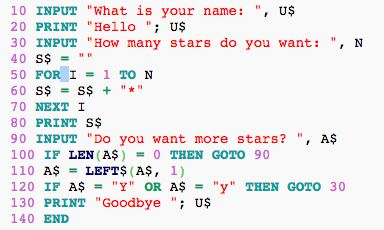
Early "Basic" computer coding example
At school we probably learnt the basics of electrical circuits and how the planets circle the sun in our solar system. We would have learnt about sound waves and light, chemical reactions and biological reproduction. However if a sudden apocalypse were to be visited upon us there wouldn't be many of us able to actually put any of these principles into practice to rebuild our society (apart from the biological reproduction that is!). 


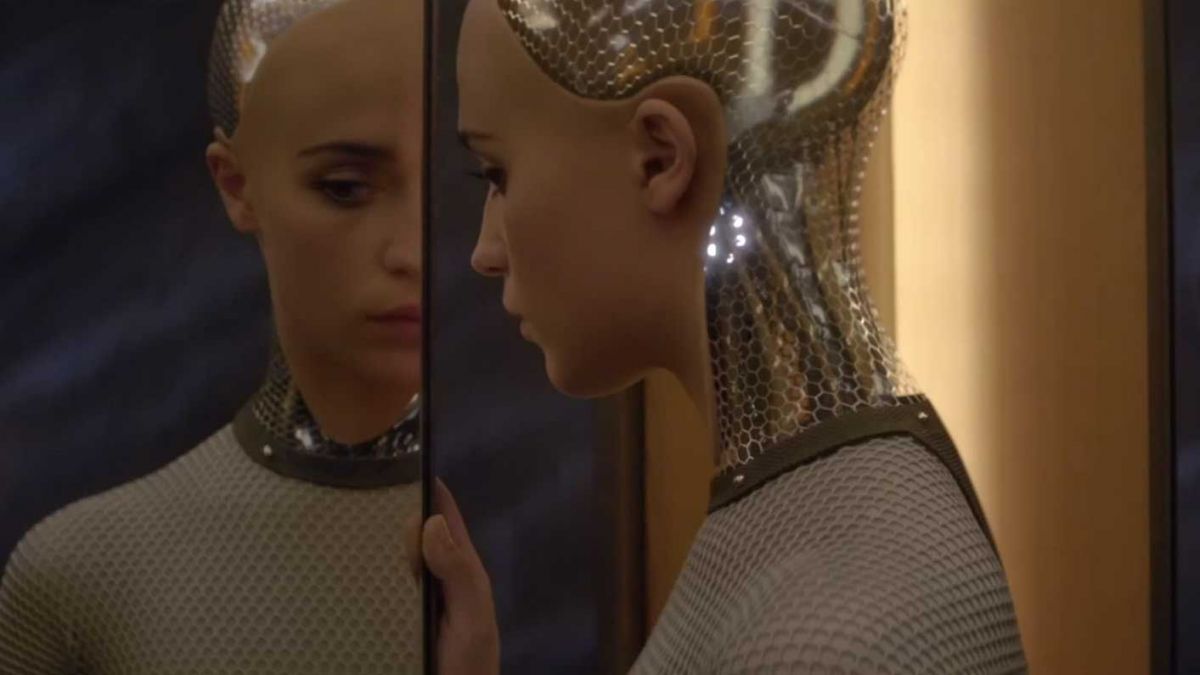
Technology has now sprinted ahead and is even racing towards AI where it's development itself will eventually become independent of any human intervention at all - the stuff of numerous dystopian science fiction scenarios!

The very intelligent and scheming android in the Ex Machina film as played by Alicia Vikander
We can't really possibly understand the workings of mobile phones and ipads. We just take all these things for granted. Such things, which would have been completely unimaginable to our grandparents, are now so ubiquitous we have no other choice. 

Our world has changed so much in the last century after relatively little "progress" in the previous millennia (the word "progress" in quotation marks as it hasn't all been for the good of course). It is now unimaginable to us how it will change further in the next 50 years - if indeed this acceleration is sustainable at all.

We are increasingly surrounded by what the authors term "black boxes", complex constructs that we do not understand even if they are explained to us. We can not comprehend the inner processes of a black box, but none the less we integrate their inputs and outputs into our decision making.

Basically we have to believe certain things, even if we can't understand them. As a result we are tending to assign more importance to those that can explain something rather than to their actual explanation.


The conclusion is that in the future it will be the norm to convince people with images and emotions rather than with arguments. Influencers will be the ones that can present and convince, not necessarily the scientists.

People no longer have the understanding or time to be experts in everything.

In my world of "alternative" health there are those that want to know all the science and empirical evidence and there are those that just want to trust that they will feel better. With increasing regulation of the industry many practitioners are beginning to concentrate on the latter, and that suits many consumers just fine.

It will become the norm to convince people with images and emotions rather than with arguments.

As one prominent leader in the field likes to answer when questioned "How does it work?" he simply says "Very well."




Thursday, 6 October 2016

The Enigma of Schrödinger and His Cat

Nicki Edgell
Perhaps the most famous cat in physics belonged, theoretically at least, to Austrian physicist Erwin Schrödinger who in 1935 devised a thought experiment involving placing his cat inside a box with a vial of poison. Interpretations of quantum mechanics at the time suggested that the concealed cat could be both dead and alive simultaneously and indeed the experiment has often been cited to illustrate the possibility of the co-existence of parallel universes or alternative realities.


However, ironically this was actually a common misunderstanding as Schrödinger was actually trying to demonstrate that such quantum superposition could not apply to objects larger than atoms. This famous experiment became known as The Schrödinger’s Cat Paradox albeit Schrödinger, perhaps frustrated by misintepretations, is rumoured to have said, later in life, that he wished he had never met the cat!

Friday, 22 July 2016

Does Science Explain Everything? Science, Silence and Religion.

Nicki Edgell

"Science is a bit like the joke about the drunk who is looking under a lamppost for a key that he has lost on the other side of the street, because that’s where the light is. It has no other choice."  Naom Chomsky

A colleague boldly stately to me the other day that "science can explain everything". I can't remember what we were talking about - homeopathy, vaccinations, feng shui, pyramids, the moon, space and the universe, stone circles, fractals, medicine, mobile phones, the stock market... but its not the point, it could have been almost any aspect of life, and he definitely believed "science can explain everything," and by extension anything science can't prove either doesn't exist or is a scam or a trick. Mmm, I don't think so, I don't think you'd have to think very long and hard to come up with some phenomena that science can't explain although we do like to think we can explain everything, even if it is only after the event (ie. we didn't predict that hurricane, or that stock market crash, but we (pretend) we can explain why it happened afterwards... not always useful - but it gives us some sort of false sense of safety and superiority).

SILENCE

Then I came across this passage in Silence by John Biguenet from the intriguing Object Lessons series, reproduced in part here:

"We have grown quite comfortable with the modern unraveling of the distinction between the visible and the invisible. Just as we believe in the existence of a silent reality - in the efficacy of a dog whistle, for example, inaudibly screeching its signal to a floppy-eared pet - we accept the existence of hadrons and the quarks of which they are constituted. Our scientists have persuaded us that phenomena invisible to our eyes because of optical limitation do, in fact, exist. They confirm that existence through indirect observations, often ingenious in conception.

"So the misplaced faith we once expressed in such common-sense formulas as 'Seeing is believing' yields to a modern belief in things unseen - a world beyond the senses. We do not dispute, for example, the underlying fabric of matter - woven of invisible protons, neutrons, and electrons, we believe, but utterly fantastic without the mathematics to support our belief.


"And this extension of the natural world to incorporate the unseen and the unheard proliferates even as modernity wars relentlessly against other forms of invisibility and inaudibility, now routinely dismissed as the supernatural. We are expected to acknowledge the existence of radiation pulsing from the center of our galaxy that we neither see nor hear but nontheless measure with a radio telescope, a device whose very name suggests the unity of the reality unperceived by our eyes or ears. At the same time, growing popular opinion regards necromancers as charlatans and belief in ghosts as symptomatic of psychological affliction.

"All this is no doubt easy to accept until one attempts to distinguish the unseen and the unheard we ridicule from that which we worship. For example, what sets apart the adepts of the occult from the clergy of established religions? If we press further into this dilemma, we may well ask whether Jeanne d'Arc, a saint listed in the Martyrology of the Catholic Church, responded to heavenly voices or whether she suffered from auditory hallucinations, commonly associated by mental health experts today with schizophrenia and psychosis?

"It would, of course, be presumptuous to answer for the reader such questions. But it is difficult to dispute our current readiness to concede the reality of a universe of unheard and unseen phenomena discovered in only the last few hundred years while debating (and increasingly rejecting) the existence of other phenomena also beyond the scope of our senses, and yet nearly universally accepted for millenia.

"On the one hand, we have learned to surpass our senses, discovering what had been beyond our ken. On the other hand, as a result of our success in devising protocols to verify that knowledge, we grow skeptical of belief in the imperceptible that resists our methods of confirmation."

SCIENCE AND RELIGION

Ancient caveman must have had their minds blown away by fire, the stars and moon at night, rainbows, lightning, hailstorms, magnetism, wind and waves. Later civilisations would have been astonished by the human development of manmade power, electricity, radio and TV, and flight. Our grandparents would not have believed the internet.

As humans and scientific explanation evolves such things in turn became taken for granted. But have we reached a point now where everything has been discovered, and everything discovered is now explainable? Or are there some things science has got wrong, and many things science just can't explain or hasn't discovered yet? At each stage in history did we make the same mistake of believing we knew it all?

The arrogance of the present human race to believe that we've reached the point where we can understand and can explain everything is frankly misguided at best and ridiculous at worse. And to believe we have "suddenly" reached this plateau of understanding and mastery over nature and the universe, only in the last 50 or 100 years - after 2 million years of evolution - is statistically very unlikely.

Science has now assumed the authority religion once held in many cultures - scientists are the new gods able to dismiss unbelievers as religious nuts, bad science advocates, or snake oil salesmen - modern day heretics if you like. Modern man is more willing to put his faith in science than myth, magic or religion. Similar could be said of a particular branch of science - modern western medicine - an industry generally unwilling to accept possible alternatives, some that have been practised for 1,000s of years in other cultures.


Biguelet again... "A Harris Poll, conducted in late 2013, found belief in God, for example, had fallen from 82% to 75% among US adults in just four years, with similar declines in belief in miracles, heaven, and the afterlife of the soul, angels and devils, and witches. If more concrete evidence is wanted The Wall Street Journal noted in a 2015 article that Dutch ecclesiastical authorities anticipate shuttering nearly 1,100 of the country's 1,600 Catholic churches in the next decade and 700 Protestant churches within the next four years. Germany has closed 515 churches in the past decade while 200 Danish churches are viewed as unsustainable."

But does modern science deserve this new found ascendancy when so much of our amazing world can not be scientifically verified? Just because something is not scientifically proven does not mean it is invalid, untrue, or non-existent.


Sunday, 26 June 2016

How Does It Work? Does It Matter?

Nicki Edgell

How Does It Work? There is no escape because the more you know the more there is to know. As with any science, the research on any subject is endless. While these folks are squirming in a sea of questions, their less curious counterparts are busy building large organizations and receiving handsome cheques each and every month.

For a moment, let's suppose that before any of us could use any household appliance, take any type of medication, drive a car, truck, motorcycle, use a digital camera, a smart phone, or Ipod, we had to completely understand how it worked before we could use it. Well, none of us would ever be able to do so much as make a slice of toast in the morning! A person would have to have degrees in electrical, mechanical, automotive, and civil engineering before he or she could do most anything. How about those prescriptions from the doctor? Better pick up a degree in pharmacy before swallowing any of those capsules. That's a pretty ridiculous picture to paint, but it's no sillier than someone insisting that they have to know all of the technical aspects of each Nikken product before they'll use them or offer them to someone else to use them.

The company has done their research. 40 years in the health business, what is there to doubt? The products work and are safe. They have been used successfully by over 30 million people. The company and 40 years of experience have done the work for you. All you have to do is use them, benefit from them, and tell your friends about them……… What Could Be Easier Than That?

Monday, 20 June 2016

Dr. Emoto's Amazing Water Crystal Photos

Nicki Edgell
Mr Emoto's Water Experiments

The Power of Thoughts

What we know now is that our thoughts affect water crystals.  So our thoughts should not be underestimated as we ought to be 70% water in our bodies.  Our thoughts literally change the physiology of our cells as messages are transported around our body on the medium of water.  Nature intended water molecules to be hexagonal like those on the top row above.  These structures match the water pores in our cells thereby allowing the water to pass in and carry vital nutrients into and out of the cell.

So negative thoughts will be adding to dehydration! And positive thoughts helping hydration!

Nikken pimag water has this hexagonal structure, just as nature intended.  It hydrates almost instantly. Even washing hands in this water shows improved hydration in just 2 minutes so imagine showering in this water and drinking this water.  We will be absorbing vital water and minerals into our soft tissues and into our cells.

I choose this type of water for myself and my family and recommend it most highly.

If you would like to read more about this delicious, alkaline, structured hydrating water there are other blogs here or go to http://pimag.eu

Wednesday, 3 February 2016

The Thing About Static Magnets

Nicki Edgell
The thing about static magnets is that there is some dispute about whether they can provide any health benefits such as pain relief, blood thinning or an increase in energy or blood flow. Magnet pioneers Nikken, who have been developing magnetic technologies for over 40 years, have invented a number of systems that create moving magnetic effects from static magnets. 

Nikken has found that the more complex the magnetic field, the more effective it is on the body. The additional benefits to these dynamic magnetic technologies over the traditional static magnets are depth of penetration and continual flux movement across a wider area.

Not All Magnets Are Equal

Static magnets create a one way flux line dimension. The flux moves from the south to the north and north back to south (a circular effect). If you create movement in the magnet (biaxial rotation for example) then the flux field, while still moving in the same process as before has a much bigger field of movement as it is taken into different positions. Nikken's Dynaflux Technology takes this moving magnet idea into a stationary magnet by forcing the opposite poles (north v north or south v south) towards each other which forces the flux lines sideways as well as in a circular movement. This helps to create the deeper penetration and wider field.
But hey, does it really matter how it works if it works? Come to a Nikken demo and stand on a pair of the latest Nikken Kenko Mstride Insoles and feel the difference yourself.


It doesn't matter if you are tall, short, big, small, male, female, old or young, it works on everybody - you will be amazed!

Also have a look at this fascinating video from Dennis Williams where he demonstrates a dynamic magnetic field from an apparently static Nikken magnet https://youtu.be/QHQPTE9fzPE?t=1m30s


Powered by Blogger.

Statutory Notice: Although every effort is made to keep this information accurate and up to date this is not an official Nikken website. Registered trademarks® of Nikken appear throughout this site. Our Independent Nikken Consultants do not make any medical claims. Nikken products are not medical devices and may not be recommended to treat specific medical conditions. People who are in their first 3 months of pregnancy, or who have a pacemaker, health problem or electronic device (either implanted or external) should consult their doctor or manufacturer of the device before using magnetic products. Do not place Nikken's magnetic products in direct contact with magnetically sensitive items such as watches, video and audiotapes, computer discs, credit cards and portable electronic equipment. It is illegal for a promoter or a participant in a trading scheme to persuade anyone to make a payment by promising benefits from getting others to join a scheme. Do not be misled by claims that high earnings are easily achieved. Any personal data is not shared. Newsletter or blog followers can opt out at any time. If you sign up for my newsletter, which is administered through Mailchimp, I will store some of your information, including your email address, and certain information about the links you click within the emails I send you, on a Mailchimp server. Neither I nor Mailchimp will ever sell your email address or share it with any other party.